Success Rate of Dental Implants
·
★ 4.7 · 1,000+ five-star reviews · Board-certified specialists · Open Saturdays
Dental implants are one of the most reliable procedures in dentistry. Long-term studies find about 96 of every 100 implants still working ten years after placement. This guide covers what the numbers really measure, what raises or lowers your odds, and what you control before and after surgery.
Seen in Midtown Houston, Saturday hours: Book an appointment · (713) 322-7474 · Dental Implants in Houston
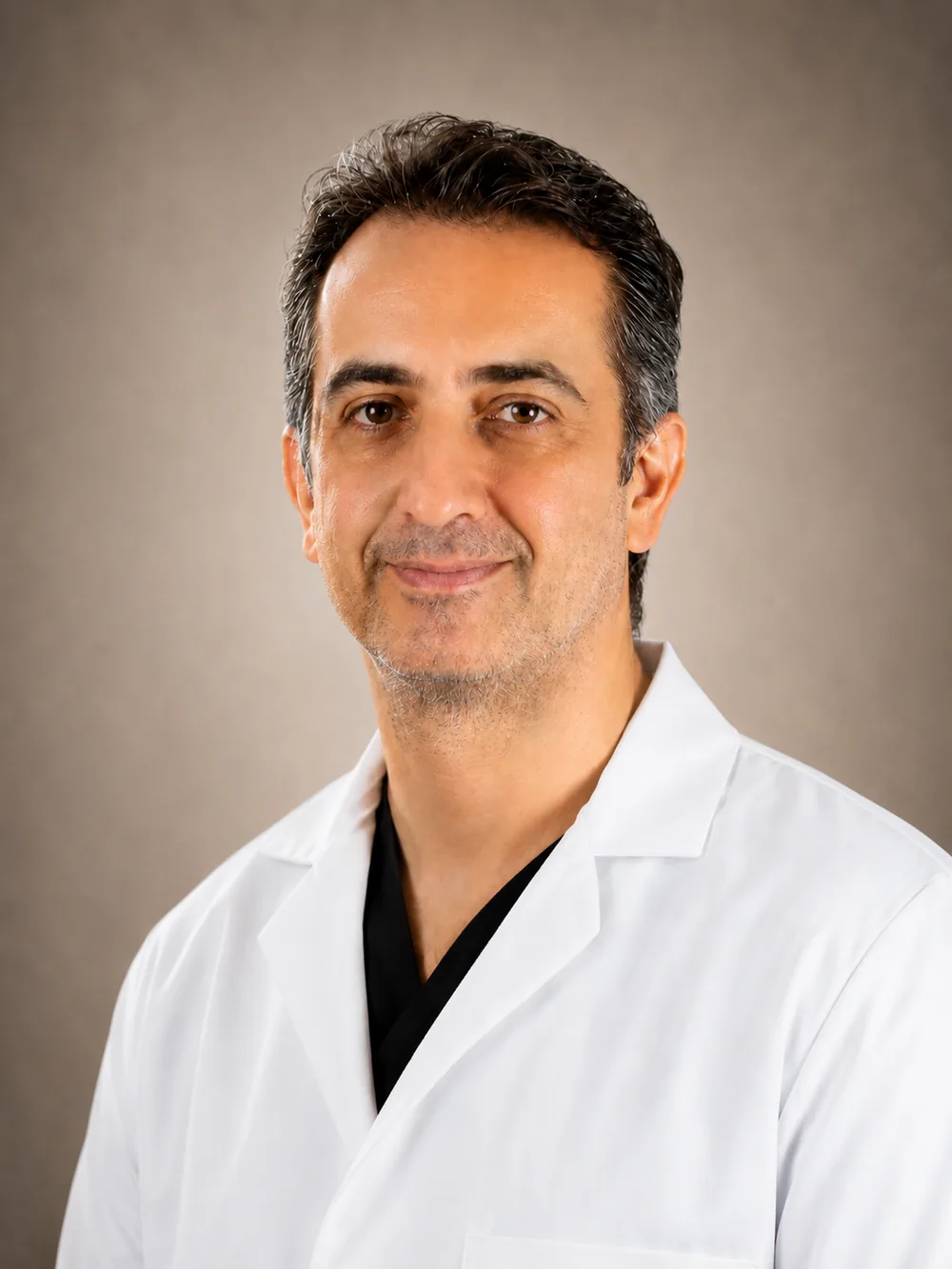
Medically reviewed by Dr. Pedram Bohluli, DDS, MS, PhD — Endodontist
Reviewed October 10, 2026
At Omega, Dr. Jonathan Rosenstein, board-certified oral & maxillofacial surgeon (ABOMS), handles dental implants.
Dental Implant Success Rate by the Numbers
Implant success and implant survival are measured differently. Success means the implant is fully functional with no pain, no infection, and no bone loss beyond normal limits. Survival simply means the implant is still physically present in the jaw, even if there are minor complications. Most published research reports survival rates. That means true success rates, with zero complications, may run slightly lower.
Short-Term Success (1 to 5 Years)
Most published studies report five-year survival in the mid to high 90s. One study of implant outcomes found that surgeons who had placed fewer than 50 implants had nearly twice the failure rate of more experienced surgeons. Who places the implant is part of the number.
Early failures cluster in the first months after surgery. That is the window of osseointegration, when the implant is fusing with the bone. An implant that integrates cleanly and gets through its first year has already cleared the riskiest stretch.
Long-Term Survival (10+ Years)
Long-term data holds up well. A systematic review of long-term studies found 96.4 percent of implants still surviving at 10 years. Fewer studies follow implants for 20 years or more, so the ten-year figure is the firmest number we can give you.
The pattern matters more than any single figure: most failures happen early. An implant that stays healthy through its first year tends to keep working for decades. The gum and bone around it just have to stay healthy too.
Success Rates by Implant Type
Not all implant work carries the same odds. The type of restoration, the number of implants, and the complexity of the case all move the numbers.
Single-tooth implants tend to do best. One post carries one crown, so the load is low and the surgery is usually simple. Most modern studies put their survival at or above the overall averages covered above.
Full-arch work holds up too. A 2021 systematic review of All-on-4 reported implant survival of 94 to 98 percent at six to eleven years. The technique keeps improving with 3D imaging and guided surgery. The upper jaw runs slightly lower than the lower jaw because its bone is softer, but both stay well above 90 percent. If you are weighing All-on-4 dental implants in Houston, the honest comparison happens over your own CT scan, not over averages.
Needing a bone graft does not doom the result. Grafting rebuilds the site so the implant starts in solid bone. The key is letting the graft heal fully before the implant carries load. A grafted case takes longer from start to finish. The extra step exists to protect the implant's odds.
What Factors Affect Dental Implant Success?
The overall success rate is high, but a few patient and procedure factors move it. Knowing them helps you and your surgeon plan for the best result.
Smoking. Tobacco is the biggest risk factor for implant failure that you can change. Smoking cuts blood supply to the surgical site and slows the bone from fusing to the implant. It also raises the risk of peri-implantitis, a chronic infection around the implant that causes bone loss. Patients who quit several weeks before surgery and stay smoke-free through the early healing months see substantially better outcomes.
Diabetes. Poorly controlled diabetes weakens bone healing and immune defenses, which raises infection risk. Patients whose blood sugar is well controlled heal much closer to normal. Bring your latest numbers to the consultation instead of ruling yourself out.
Bone density and volume. The implant needs enough jawbone to hold it steady. If you are short on bone, a graft rebuilds the site before the implant goes in. Thin bone is a planning problem, not a no.
Oral hygiene. Implants cannot get cavities, but the gum and bone around them can still get infected. Peri-implantitis, often driven by plaque buildup, can cost you an implant years after it was placed. A history of gum disease raises that risk further. That is why active gum disease gets treated before an implant is placed. Steady brushing, flossing, and professional cleanings are essential.
Dental Implants vs. Bridges and Dentures: How Do They Compare?
Wondering if implants are worth it? It helps to compare them with the other ways to replace a tooth.
Fixed dental bridges require reshaping the healthy teeth on either side of the gap to support the prosthetic tooth. The bone under the false tooth keeps shrinking, because nothing stimulates it. A well-made bridge can serve for years. Still, it is a part with a service life, not a one-time fix.
Removable dentures need periodic relines or remakes. The jawbone under them keeps shrinking, so the fit drifts. Many wearers report weaker chewing, speech trouble, and sore spots as the bone changes shape. Dentures do nothing to stop that bone loss.
Research on implant-supported dentures in the lower jaw shows that implants slow the jawbone loss that follows losing teeth. Add the 10-year survival figures above, and implants are a long-lasting, highly functional option for patients who qualify.
How to Maximize Your Dental Implant Success Rate
Your surgeon controls the procedure. You control a lot of the rest, through preparation and aftercare. Here is what makes the biggest difference.
Choose a qualified specialist. Experience shows up in the numbers: in the study above, surgeons who had placed fewer than 50 implants had nearly twice the failure rate of more experienced surgeons. Ask who actually does the surgery, what their training is, and how they plan the case. At Omega Dental Specialists, our oral surgeons handle implant surgery, and every consultation includes a 3D CBCT scan. Typical implant costs in Houston, and how we quote.
Stop smoking. If you smoke, plan to quit well before your procedure. Even cutting back in the weeks around surgery improves blood flow and healing.
Manage chronic conditions. Work with your doctor to steady your blood sugar and blood pressure. Some medicines affect bone healing, so bring a current medication list to your consultation.
Follow post-op instructions. Stick to soft foods early on, take what we prescribe, and leave the surgical site alone. The first 6 to 12 weeks are the most critical window for the bone to fuse.
Maintain oral hygiene for life. Brush twice a day, floss around the implant, and keep every cleaning and follow-up. Caught early, peri-implantitis can be treated. Left alone, it eats bone and can cost you the implant. Learn to recognize the early signs of implant trouble so you can act quickly.
Why Choose Omega Dental Specialists in Houston for Dental Implants
We offer implant consultations, flexible financing, and Saturday appointments. If you are still weighing implants, book a consultation and talk through your case with one of our specialists.
Ready to explore dental implants?
Call (713) 322-7474 or book your consultation online
Every figure above assumes proper planning — the CBCT scan, the graft when the bone needs it — which is exactly what the consultation for dental implants in Houston is for.
Frequently asked
What is the average success rate of dental implants?
Most studies report five-year survival in the mid to high 90s, and a large systematic review found 96.4% of implants still in service at 10 years. Fewer studies follow implants for 20 years or more, so the ten-year figure is the firmest number we have.
How long do dental implants last?
Most implants last well past 10 years, but no one can promise a lifetime. One 2024 review of 20-year studies estimated 78% to 92% of implants were still in place, depending on how patients who dropped out were counted. The crown on top is more likely to need replacing: just over 1 in 10 crowns are replaced within 10 years. Checkups shouldn't stop after surgery, or even a decade later.
What is the failure rate of dental implants?
Across published studies, roughly 2 to 5 implants in 100 fail, depending on patient health, implant location, and who places it. Most failures happen within the first year, before or during the period when the implant fuses with the bone. After that first year, failure becomes uncommon.
Does smoking affect dental implant success?
Yes. Smoking significantly reduces dental implant success rates. Research shows smokers have higher rates of peri-implantitis and implant failure due to impaired blood supply and slower healing. Quitting several weeks before surgery and staying smoke-free through the early healing months improves outcomes.
Are dental implants more successful than bridges or dentures?
For most patients who qualify, yes. Bridges and dentures wear out over time: a bridge loads the neighboring teeth and a denture loses its fit as the bone shrinks, and neither slows jawbone loss. Implants can slow it, as research on implant-supported lower dentures shows, and with 96.4% still in service at 10 years, they are a long-lasting option.
Can dental implants fail after 10 years?
Late implant failure is possible but uncommon. Most failures occur within the first year. A large review found 96.4% still in service at 10 years, and a 2024 review of 20-year studies estimated 78% to 92% at 20 years, so some are still lost in the second decade. Late failures are typically caused by peri-implantitis (infection around the implant), excessive bite force, or systemic health changes. Regular dental visits help catch and prevent these issues early.
What can I do to improve my dental implant success rate?
To maximize your dental implant success rate: choose an oral surgeon or periodontist, quit smoking before surgery, manage chronic conditions like diabetes, maintain excellent oral hygiene with twice-daily brushing and flossing, attend all follow-up appointments, and avoid chewing hard objects on the implant site during healing.