Oral surgeons in Houston, no referral needed
Two oral and maxillofacial surgeons, on site, with IV sedation and a 3D scan that plans the surgery before it is booked. You can call us directly. A referral from your dentist is welcome but not required.
You can book with us directly
You do not need a referral from a general dentist to see an oral surgeon here. You can call and book the consultation yourself.
We also take referrals from general dentists, but nothing about the specialty requires one. If a tooth is broken below the gum, if a wisdom tooth is impacted, or if you have been told you need a graft before an implant, you can come straight to us.
What a referral does add, when you have one, is the imaging and notes your dentist already has. Bring them if you have them; we will take our own scan either way.
Call (713) 322-7474 or book online.
If it is a single tooth, read what to expect from a tooth extraction before you come in. If you were told there is not enough bone for implants, ask us about subperiosteal implants at the same visit.
What an oral surgeon is, and how they differ from a dentist
An oral and maxillofacial surgeon is a dentist who has completed a hospital based surgical residency after dental school, typically four to six years, covering anesthesia, surgical management of the mouth, jaws and face, and the medical care that goes with operating on people.
The practical difference from a general dentist is scope and setting. A general dentist removes teeth that lift out. A surgeon handles the ones that do not: impacted under bone, fractured below the gum, sitting against a nerve, or needing bone removed to get them out. They are also trained and credentialed to administer IV sedation, which is why it is available here rather than referred elsewhere.
"Dental surgeon" is not a recognized specialty title in the United States and is often used loosely. The credential to look for is oral and maxillofacial surgery, and board certification by the American Board of Oral and Maxillofacial Surgery.
When your case needs an oral surgeon
A general dentist handles routine extractions well. The cases that belong here are the ones where the anatomy or the risk is bigger than a standard visit is built for: a wisdom tooth that is impacted or only partly through the gum, a tooth broken off below the gum line, an extraction that needs bone removed or the tooth sectioned to come out cleanly, a socket that needs a graft so an implant can follow, and anything that calls for IV sedation.
Jaw pathology, cysts and surgery on the jaw joint are the same specialty. If you are not sure which side of that line your tooth is on, the CBCT scan at your consultation usually settles it in a few minutes, and the same surgeon who reads it does the procedure.
Who would be treating you
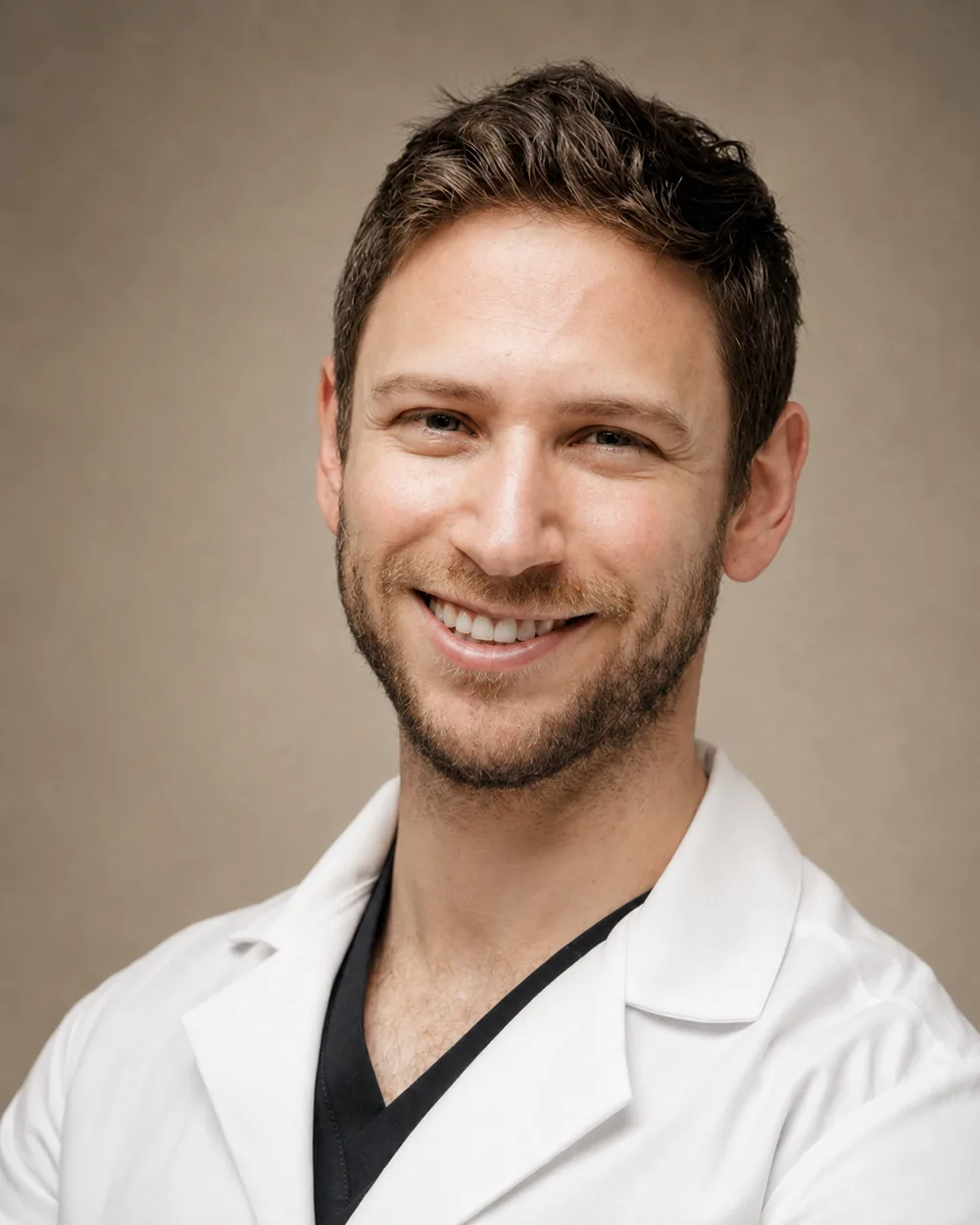
Dr. Jonathan Rosenstein is an oral and maxillofacial surgeon, board certified and a Diplomate of the American Board of Oral and Maxillofacial Surgery. He earned his Bachelor of Science in Biology from Touro College, where he graduated valedictorian, took his DDS at the University of Maryland School of Dentistry, and completed his surgical residency at The Brooklyn Hospital Center.
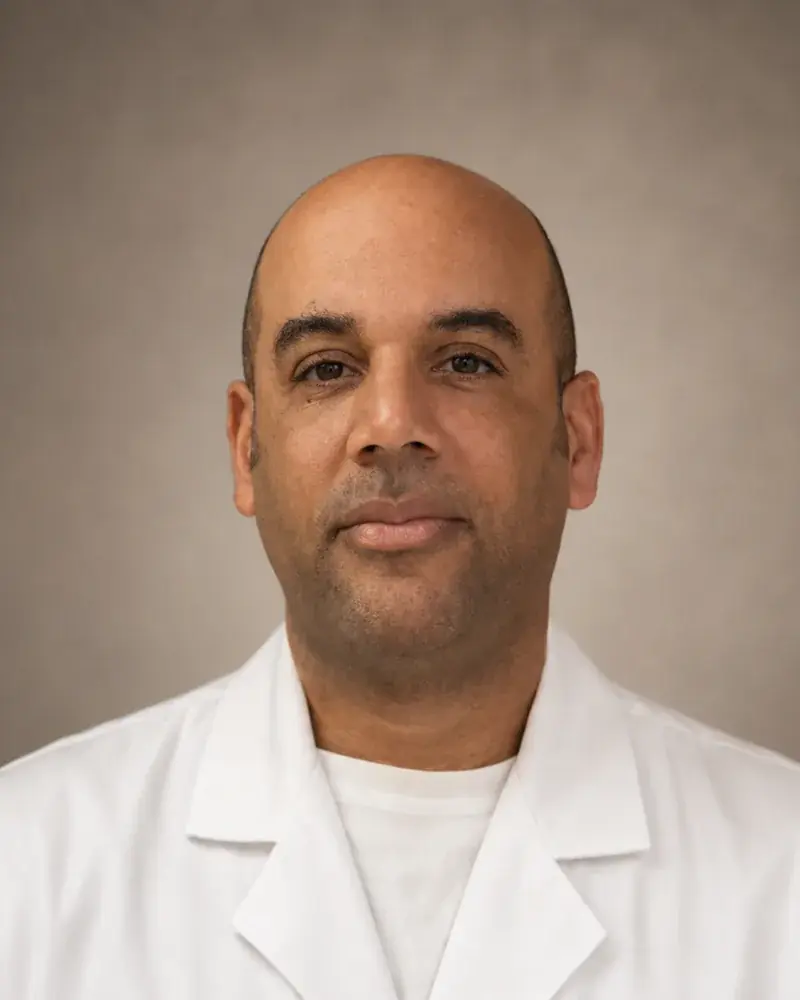
Dr. Edmund Watkins also practices oral and maxillofacial surgery here. Born in Barbados, he attended the University of California, Santa Barbara before graduating from Meharry Medical College School of Dentistry, then completed a General Practice Residency at Bronx-Lebanon Hospital and an internship at the Bronx VA in association with Mount Sinai, both hospital based programs. He completed his oral and maxillofacial surgery residency at Harbor-UCLA Medical Center.
Both work in the same building as the restorative dentists, the periodontist and the endodontists, which is the part that matters for anything that does not end at the extraction.
What we treat
• Wisdom teeth, impacted or erupted, at $450 per tooth. Full detail on the wisdom teeth page.
• Tooth extraction at $420, including teeth broken at the gum line or too decayed to restore.
• Bone grafting: a socket-preservation graft is $650 and is placed only when the socket is damaged; ridge augmentation and sinus lifts, which rebuild bone for an implant, are quoted after your CBCT scan. See bone grafting.
• Dental implant placement, from $3,900 for a single implant with the crown included: the surgeon places the post, and our restorative dentists fit the crown. See dental implants.
• Full-arch implants, where four to six implants hold a fixed set of teeth. See All-on-4.
• Surgical exposure of impacted teeth, and the extractions that orthodontic treatment sometimes needs first.
• Biopsy and assessment of lesions in the mouth that need a definite answer rather than watching.
Anything that turns out to sit outside this list, we will tell you plainly and help you find the right place rather than attempting it.
The scan that plans the surgery
Nothing gets scheduled off a guess. The CBCT scan shows the tooth or the graft site in three dimensions rather than the flat view a standard X ray gives.
On a lower wisdom tooth, it shows exactly where the roots sit relative to the inferior alveolar nerve, which supplies feeling to the lip and chin. That single measurement changes how the surgeon approaches the tooth, and sometimes changes the recommendation from removal to monitoring.
On an upper molar it shows the sinus floor. For grafting and implant planning it shows how much bone is actually there, in width and height, rather than how much appears to be there.
It happens at your consultation, and it is the reason we will not quote a surgical case over the phone.
Why grafting at extraction time is worth discussing
Bone starts to shrink as soon as a tooth is gone. A systematic review of human extraction-site studies found the jawbone lost 29% to 63% of its width within six months after a tooth comes out, with the fastest loss in the first three to six months. That is why we check each socket on the X-ray at the extraction.
A socket-preservation graft is placed only when the socket is damaged, either by infection or because too little bone was left after the extraction. When one is needed, it holds the space with bone material so the ridge keeps its volume and adds one step to the same appointment rather than a second surgery later. If the socket is intact, no graft is needed. Ridge augmentation and sinus lifts are bigger procedures, quoted after your CBCT scan. More on the bone grafting page.
When surgery isn't the first move
Not every tooth that hurts needs to come out, and not every impacted tooth needs surgery this year. A cracked or infected tooth with sound roots is often better served by a root canal, which keeps the tooth; our endodontists work in the same office, so that conversation happens the same day. A wisdom tooth that is impacted but causing no pain, infection or damage to its neighbour can be watched with periodic X-rays rather than removed, which is what the ADA's patient guidance describes; the trade-off is that removal gets harder with age, so we set a review interval rather than forgetting about it. Loose teeth from gum disease are sometimes stabilised with periodontal treatment instead of extraction when the bone around them is still adequate.
When surgery is not needed, we say so at the consultation. Not every exam ends in a treatment plan.
Sedation, and how to prepare
Most people worry more about the anesthesia than the surgery.
Local anesthetic alone is enough for a straightforward extraction. The area is fully numb, you stay awake, and you can drive yourself home.
IV sedation at $2,000 puts you in a deeply relaxed state where you are unaware of the procedure and typically remember little of it. You will need someone to drive you, and you will need to follow fasting instructions we give you beforehand.
General anesthesia is available in the office for specific cases, and when it's used, our visiting physician anesthesiologist gives it. We'll tell you at the consultation whether your case calls for it. Dr. Shirin Farhadian, our periodontist, holds a Texas Level 3 sedation permit.
Which one suits you is a conversation at the consultation rather than a default. Anxiety is a legitimate reason to choose sedation and we will not talk you out of it. More on the options at sedation dentistry.
Dry socket, and how to stay out of its way
The complication people fear most after an extraction is dry socket, and it is worth understanding because it is largely preventable. The socket heals under a blood clot; when that clot dislodges or fails to form, the bone and nerves underneath are left exposed, and the result is a throbbing pain that starts a few days after surgery and often radiates to the ear.
The clot's enemies are suction and smoke: straws, spitting, vigorous rinsing, and smoking in the first days. Skip those and most people never meet this problem. If pain is climbing on day two or three instead of fading, call us; a medicated dressing settles a dry socket quickly, and our dry socket guide covers the details.
The first week afterward
Plan for a quiet first day. Bite on gauze until the bleeding settles, ice the outside of your face in twenty minute stretches, and eat cool, soft food. Swelling usually peaks around day two or three and then starts down, so feeling puffier on Tuesday than Monday is normal rather than a setback.
The rules that matter most are the boring ones. No straws, no smoking or vaping, no vigorous rinsing and no spitting for the first 72 hours, because all four dislodge the clot that is holding the socket. Gentle warm salt water rinses start from day two.
Call us rather than waiting if pain climbs sharply around day three, if swelling worsens after day three instead of easing, if you have a fever, or if bleeding restarts and will not settle with pressure. Pain that increases around day three usually means dry socket, which we treat in one visit.
We keep same-day emergency slots on weekdays for exactly this.
Oral surgery in Midtown Houston
We are at 106 W Gray Street in Midtown, between Downtown and the Texas Medical Center, with parking on site. Surgical cases come to us from Montrose, River Oaks, the Heights, EaDo and the Museum District, and we take referrals from general dentists.
The practical consequence of a multi-specialty practice is that the extraction, the graft that may follow it, and the implant that replaces the tooth are planned in one office by people who talk to each other. When those three sit at three addresses, the compromises show up in the final result.
Open Monday to Friday 9 to 5 and Saturday 9 to 3. Saturday is mainly for consultations and follow-ups, and surgery is possible on some Saturdays; ask when you book.
A tooth that has to come out today does not need to wait for a consultation: our emergency tooth extraction page covers same-day removal and its fees.
Call (713) 322-7474 or book online. You get a 3D CBCT scan at your consultation.
Treatments & pricing
Wisdom teeth removal
All four wisdom teeth, under IV sedation, in one visit. Most patients return to normal activity in 3-5 days.
Bone grafting
Socket preservation at an extraction, when the socket is damaged. Ridge augmentation and sinus lifts to restore bone before implants are quoted after your CBCT scan.
Tooth extraction
Simple and surgical extractions. Same-day extractions available for emergencies.
IV sedation
IV sedation, given by our two oral surgeons, our periodontist or, in some cases, a visiting physician anesthesiologist. Most patients remember little or nothing of the procedure.
Prices are estimates for self-pay patients before insurance. What your own plan contributes depends on the policy, and we verify it with your insurer before treatment. Financing through Cherry, Affirm and Sunbit for qualifying applicants, subject to the lender's approval.
The team who handles this work
Frequently asked
Can you go straight to an oral surgeon, or do you need a referral?
You can book directly with us. No referral from a general dentist is required to see an oral surgeon at Omega Dental Specialists. We also take referrals from general dentists. If you have imaging or notes from your dentist, bring them; we will take our own CBCT scan either way.
How much does it cost to see an oral surgeon in Houston?
You get a 3D CBCT scan at your consultation, and we give you today's consultation fee when you call. It is not a screening visit; it is the appointment where the surgeon examines you, reads the scan, and tells you what the case actually involves.
Treatment starts at $420 for an extraction, $450 per tooth for wisdom teeth, $650 for a socket-preservation graft, with ridge augmentation and sinus lifts quoted after your CBCT scan, and $2,000 for IV sedation. Sedation is charged per appointment rather than per tooth, which is why doing multiple extractions in one visit costs less overall than splitting them.
Where your case lands depends on what the scan shows. A fully erupted tooth with simple roots is not the same job as a horizontally impacted lower wisdom tooth under bone. We will tell you which one you have, in writing, before anything is booked, and the number does not move unless the plan changes and you approve the change.
Whether your policy contributes depends entirely on that policy. Surgical extractions are more commonly covered than elective treatment, and some plans process impacted teeth under medical rather than dental benefits. We verify your specific benefit with your insurer before treatment at no charge, file the claim for you, and give you your share in writing. Cherry, Affirm and Sunbit spread the balance monthly.
What is the difference between a dental surgeon and an oral surgeon?
"Dental surgeon" is not a recognized specialty title in the United States and is used loosely. The credential to look for is oral and maxillofacial surgery: a dentist who completed a hospital based surgical residency of typically four to six years after dental school, covering anesthesia and the surgical management of the mouth, jaws and face. Dr. Jonathan Rosenstein is board certified by the American Board of Oral and Maxillofacial Surgery.
How much does a tooth extraction cost in Houston?
A tooth extraction is $420 at Omega Dental Specialists and wisdom teeth are $450 per tooth. IV sedation, if you want it, is $2,000 per appointment rather than per tooth, so removing several teeth in one visit costs less overall than splitting them across visits. A socket-preservation graft, placed only when the socket is damaged, is $650. Local anesthetic is included.
Will I be asleep during the procedure?
Only if you choose to be. Local anesthetic alone is enough for a straightforward extraction, and you can drive yourself home. IV sedation at $2,000 puts you in a deeply relaxed state where you are unaware of the procedure and remember little of it, and you will need a driver. General anesthesia is available in the office for specific cases, given by our visiting physician anesthesiologist. Anxiety is a legitimate reason to choose sedation.
Does insurance cover oral surgery?
It depends on your policy and on the procedure. Surgical extractions and wisdom teeth are more often covered than elective treatment, and some plans process oral surgery under medical rather than dental benefits, particularly for bony impactions. We verify your specific benefit with your insurer before treatment, file the claim for you, and give you your share in writing beforehand. That check is at no charge.
What is bone grafting and do I need it for implants?
A bone graft rebuilds jawbone that has shrunk after a tooth was lost, giving an implant a stable foundation. At an extraction, a socket-preservation graft is $650 and goes in only when the socket is damaged, which we check on the X-ray. Ridge augmentation and sinus lifts, which rebuild bone that is already gone, are quoted after your CBCT scan shows how much is left. Needing one is a step, not a reason to stop.
How long is recovery from oral surgery?
Most people take two to three days off desk work after a surgical extraction, with swelling peaking around day two or three and easing after that. Soft food for the first week, and no straws, smoking, spitting or vigorous rinsing for the first 72 hours, since all four dislodge the clot and cause dry socket. Surgery is possible on some Saturdays; ask when you book.
Related specialties
Ready to get started?
Book a consultation. We'll walk you through your options, your costs, and your timeline - no pressure.