Dental implants in Houston, done by the people who specialize in them
Single tooth, multiple teeth, or full arch. Every implant placed by a surgical specialist, one of our oral surgeons or our periodontist, and restored by a restorative dentist, on a 3D planned roadmap from day one.
What a dental implant actually is
An implant replaces the root of a missing tooth, not just the part you can see. It is a small titanium post that sits in your jawbone where the root used to be. Over the following months the bone grows tightly around it, which is what makes an implant feel solid when you bite down.
There are three pieces. The post in the bone, a connector called an abutment, and the tooth on top, which can be a single crown, a bridge, or a full arch of teeth. Understanding those three parts explains why treatment happens in stages rather than in one appointment, and why quotes that look far apart are often counting different pieces.
The practical difference from a bridge is that neighboring healthy teeth are left alone. Nothing gets filed down to hold the replacement in place. An implant also puts pressure back through the jaw when you chew, which helps slow the bone shrinkage that normally follows a missing tooth.
If you have been told your bone has shrunk too far, subperiosteal implants sit on the bone rather than in it, and if you want to leave with a fixed set of teeth the day of surgery, see same-day dental implants. After placement we walk you through how to manage pain after implants and how to care for dental implants so they last.
What the research says about implant success
The full picture, including what lowers the odds, is in our guide to the success rate of dental implants.
Dental implants are one of the most studied procedures in dentistry, and the numbers hold up. A systematic review of long-term studies found 96.4 percent of implants still in service ten years after placement, and well-kept implants routinely run for decades.
Who places the implant is part of that number. One study of implant outcomes found that surgeons who had placed fewer than 50 implants had nearly twice the failure rate of more experienced surgeons. That is why this page keeps repeating the same structural point: here, placement is surgeon work and restoration is restorative work, each done by the person who does it all week. The full picture, sources included, is in our guide to implant success rates.
Osseointegration: the quiet months that decide everything
Between placement day and the final tooth there is a stretch where nothing seems to happen. That stretch is the treatment. The bone is growing onto the implant surface, a process called osseointegration that takes roughly three months and sometimes longer, and it is what turns a titanium post into something you can chew on for decades.
Rushing it is how implants fail. The implant must not carry real load before the bone has locked on, which is why temporary teeth during integration are designed to look good rather than to chew hard, and why we schedule integration checks instead of guessing. Patience here is not caution for its own sake; it is the difference between an implant that lasts and one that loosens in year two.
Who is a good candidate, and what actually disqualifies you
Most adults with a missing, cracked, or failing tooth can have an implant. What matters is whether you have enough healthy bone to hold the post, and whether your gums are stable. We answer both with a CBCT 3D scan, which shows bone height, bone width, and the position of nerves and sinuses before anything is planned.
Very little disqualifies someone outright. Most of what people worry about only adds a step.
• Not enough bone is the most common finding, and it is a step rather than a stop. Thin or shallow bone is rebuilt with a graft or a sinus lift, then the implant goes in once it has healed. See bone grafting. When the upper jaw has too little bone even for that, zygomatic implants anchor in the cheekbone instead.
• Active gum disease is treated first by our periodontist, because implants fail faster in inflamed tissue.
• Diabetes is fine when it is well controlled. Poorly controlled diabetes slows healing enough to matter, and we would want it managed before surgery.
• Smoking is the single clearest predictor of early implant failure. It does not disqualify you, but we will be direct with you about the odds.
The genuine cautions are narrower: past radiation to the head or neck, certain intravenous bone density medications, and some immune conditions. In those cases we coordinate with your physician rather than deciding alone. Teenagers usually wait until jaw growth has finished, so the implant does not end up out of line with teeth that are still moving.
The process, step by step, and who does what
Your first visit is a consultation with 3D imaging. You leave with a written plan and a written quote, not a verbal estimate.
If a tooth needs to come out or bone needs building, that happens first, then a healing period. Placement itself is a short outpatient procedure done by one of our oral and maxillofacial surgeons or our periodontist, with local anesthetic and sedation options if you want them. The post goes in, a healing cap goes on top, and the bone integrates over the next several months.
Once the implant is stable we scan or take an impression, and our restorative dentist designs and fits the final tooth. Shade, shape, and bite are checked before anything is cemented or screwed down.
That handoff is the reason to have this done in one building. The surgeon places the post where the final tooth needs to sit, because the person restoring it is down the hall rather than across town. When those two people work at different addresses, the compromise usually shows up in the final tooth, and by then it is expensive to undo. If you already have a plan and a quote from another office, bring them to a dental implant second opinion visit and we will go through them with you line by line.
Who places your implant
Implants at Omega are a two person job by design, and both people are in the building.
Dr. Jonathan Rosenstein is an oral and maxillofacial surgeon, board certified and a Diplomate of the American Board of Oral and Maxillofacial Surgery. He trained at the University of Maryland School of Dentistry and completed his surgical residency at The Brooklyn Hospital Center.
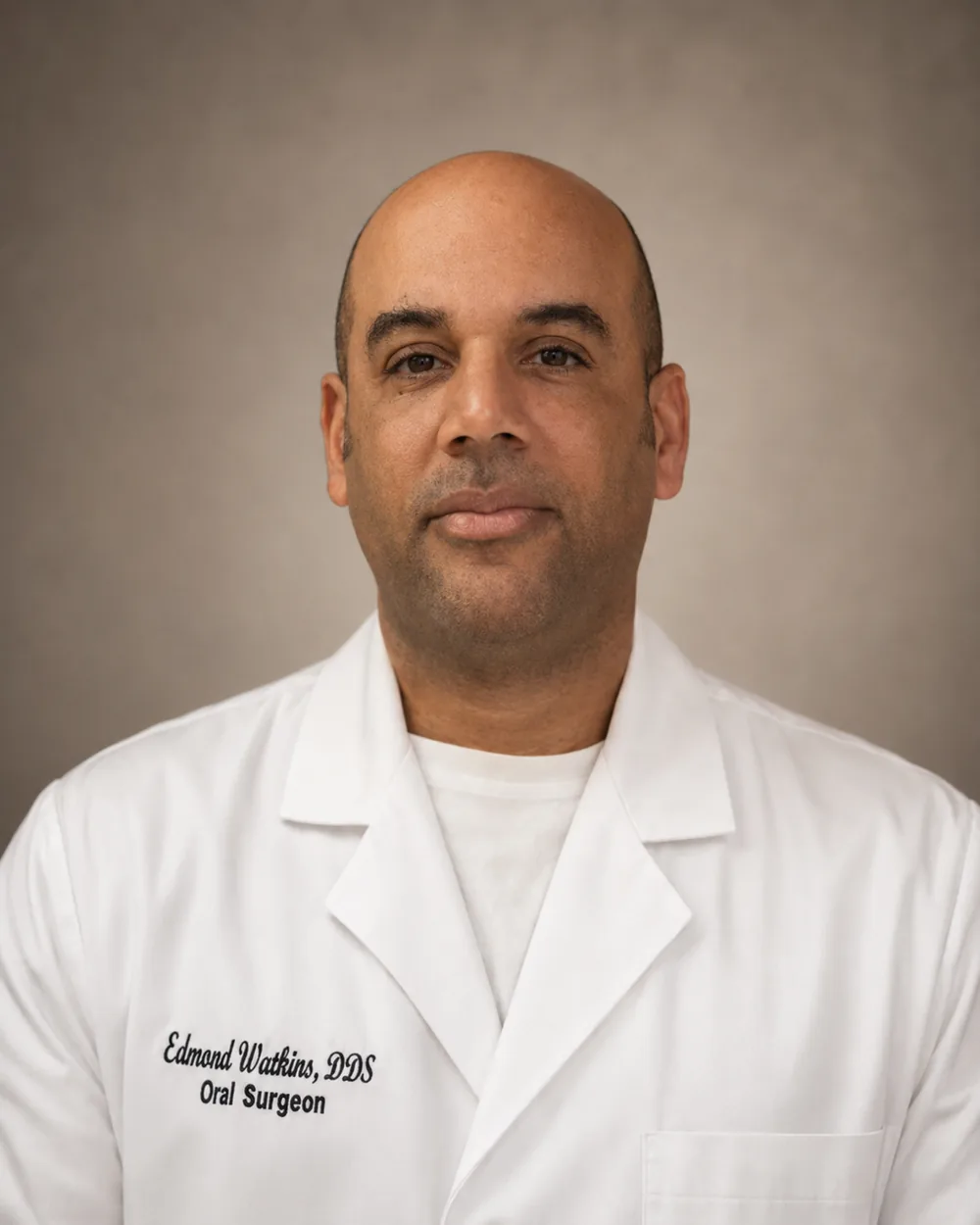
Dr. Edmund Watkins also practices oral and maxillofacial surgery here, with hospital based training at Bronx-Lebanon Hospital and the Bronx VA in association with Mount Sinai.
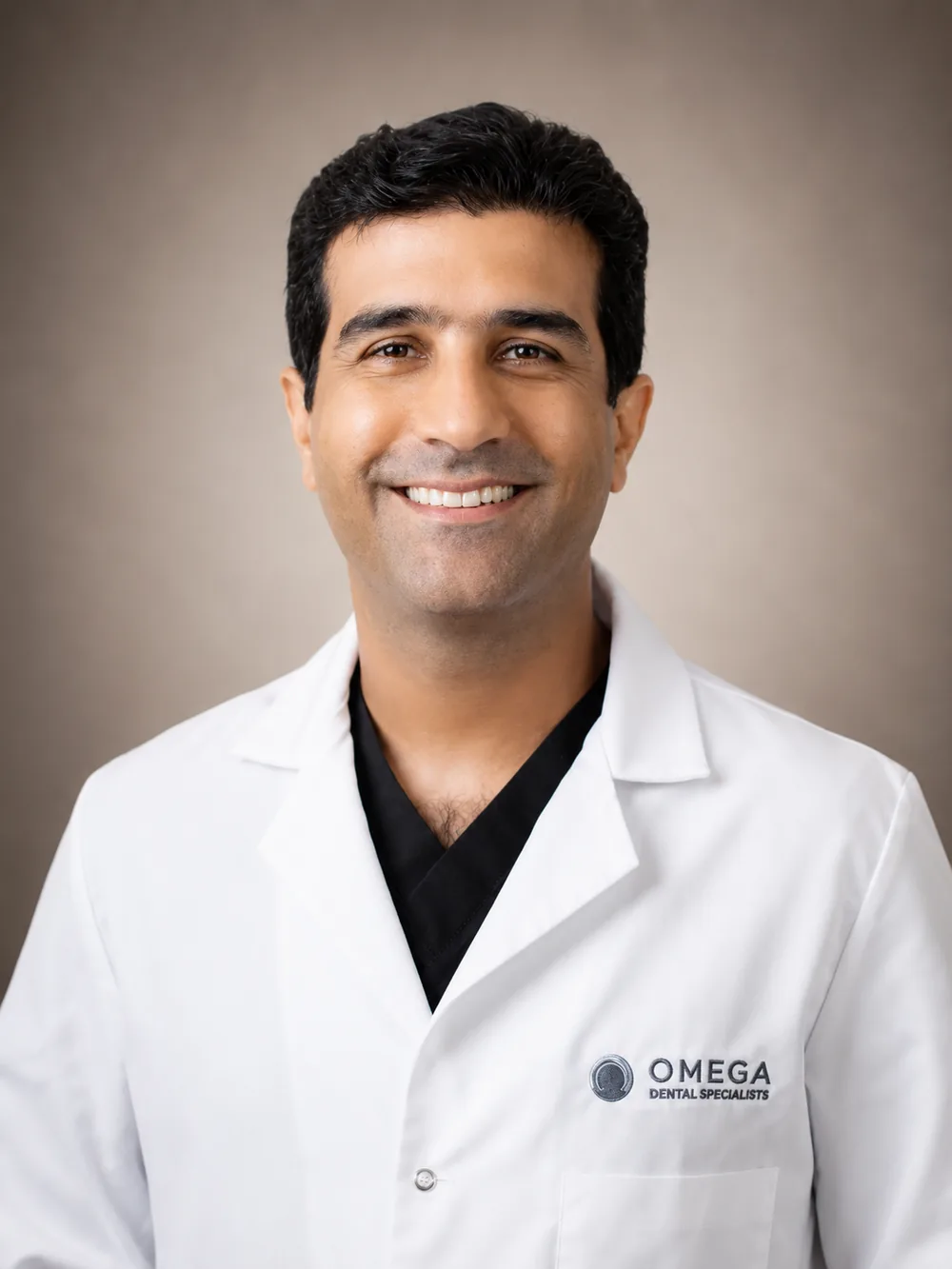
Dr. Mohsen Khobyari handles the restorative side. He earned his DDS from the University of Texas Health Science Center with the highest honors the program offers, followed it with in depth training in implantology, and has restored more than 10,000 implants across more than two decades in practice.
Dr. Evan Melamed, a University of Texas Dental Branch graduate practising restorative and cosmetic dentistry since 1999, restores implant cases alongside him. For full-arch cases, our prosthodontist, Dr. Nisa Dadjoo, designs and fits the new teeth with Dr. Khobyari.
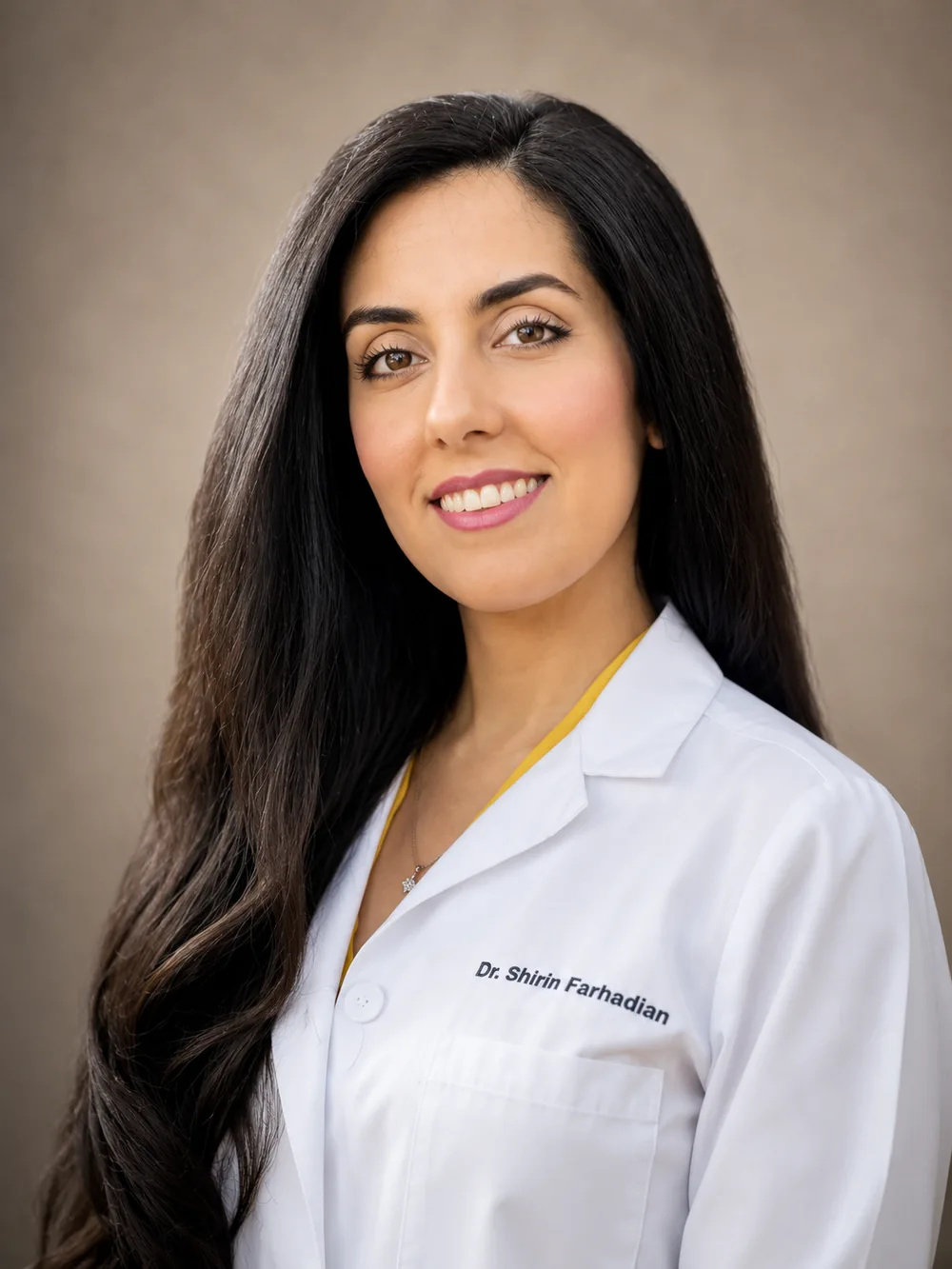
Our periodontist, Dr. Shirin Farhadian, board certified by the American Board of Periodontology, places implants too, from a single tooth to a full arch, and treats the gums first when they need it. Nothing about your case gets referred out.
Recovery and long-term care
The first two to three days are the noticeable ones. Expect some swelling and soreness around the site, managed with ice, rest, and the medication we send you home with. Most people who work at a desk are back the next day. Stick to soft foods, skip straws and vigorous rinsing for the first day, and start gentle warm salt water rinses after that. Do not smoke while the site is healing.
Call us, do not wait, if pain is climbing after day three, if you have a fever, or if the healing cap feels loose. We keep same-day emergency slots open on weekdays.
Long term, an implant is cared for like a natural tooth. Brush it, clean around and under it with floss or a water flosser, and keep your cleaning schedule. The tissue around an implant can develop its own form of gum disease, called peri-implantitis, and it is quiet in the early stages, which is the argument for keeping your recall appointments rather than waiting until something hurts.
If you grind your teeth, wear the night guard. Grinding is one of the main causes of chipped or loosened implant crowns.
Implants in Midtown Houston
We are at 106 W Gray Street in Midtown, between Downtown and the Texas Medical Center, with parking on site. Get directions. Patients come to us from Montrose, River Oaks, the Heights, EaDo, the Museum District and further out along the 59 and 288 corridors.
The location matters more for implants than for most treatment, because implant care is not one visit. Between the consultation, the placement, the integration checks and the final restoration, you will be in the chair several times across a few months. Somewhere you can reach without crossing the city is worth something.
We are open Monday to Friday 9 to 5 and Saturday 9 to 3. The Saturday hours are there because consultations and follow ups are hard to fit around a working week, and surgery is possible on some Saturdays; ask when you book.
Call (713) 322-7474 or book online, and bring any recent X rays if you have them.
Patients rate us 4.7 stars across more than 1,300 Google reviews, and implant work is a large share of them. Read what patients say before you decide anything; we would rather you compare us informed than take our word for it.
Where to go next, depending on your case
Implant treatment is not one decision, it is several, and the right page depends on where you are.
• Replacing a single tooth: start with the dental implant cost in Houston.
• Missing most or all of an arch and want fixed teeth: All-on-4 and full mouth implants.
• Still deciding between a fixed arch and an implant denture: the full mouth dental implants guide compares them stage by stage.
• Want a removable option that still snaps in solidly: implant supported dentures.
• Told you do not have enough bone: bone grafting is the step that comes first.
• Budget is the obstacle: the affordable implants page sets out what we can actually do about it.
• Comparing us against a full-arch chain: alternatives to ClearChoice.
If your question is speed, same-day dental implants covers when an implant and a temporary tooth can genuinely happen in one visit.
Treatments & pricing
Single tooth implant
Replace one missing tooth with a permanent titanium implant + zirconia crown. 30-min placement, ~3-month integration.
Multi-tooth bridge
Two implants supporting a fixed bridge. Permanent alternative to a removable partial denture.
All-on-4 / All-on-6
Four to six implants support a fixed bridge; a temporary set usually goes in the day of surgery when the implants are stable enough. Soft diet while they integrate.
Implant-supported denture
Snap-in denture stabilized by 2-4 implants. No more denture cream or slippage.
Prices are estimates for self-pay patients before insurance. What your own plan contributes depends on the policy, and we verify it with your insurer before treatment. Financing through Cherry, Affirm and Sunbit for qualifying applicants, subject to the lender's approval.
Frequently asked
How much do dental implants cost in Houston?
A single tooth implant is $3,900 here, with the post, abutment and crown included, and a fixed full arch starts at $27,000 per arch. These are the same figures we put in writing at your consultation.
- Single tooth implant: $3,900. That is the post, the abutment and the crown.
- Implant bridge replacing several teeth in a row: $9,000.
- Implant supported denture, removable, snapping onto implants: $17,000 per arch.
- All-on-4 or All-on-6, a fixed arch of teeth on four to six implants: from $27,000 per arch.
Then there is anything the site needs before the implant goes in. For a single implant, a bone graft is $650 and an extraction is $420; for a full arch, extractions are quoted at your CBCT consultation. IV sedation is $2,000 per appointment, and most full-arch surgery is done under it. The 3D CBCT scan that plans the whole thing is taken at your consultation.
What moves the number is the site, not the sales pitch. A tooth lost last month with intact bone around it is the simple end. A tooth lost eight years ago, where the ridge has resorbed and the sinus has dropped, needs grafting first and a longer timeline. That is why we will not quote an implant over the phone, and why anyone who does is guessing.
Full breakdowns are on the implant cost page and the single tooth implant guide.
What disqualifies you from getting dental implants?
Less than most people expect. Insufficient bone is the most common finding and it is a step rather than a stop, since it is rebuilt with a graft or sinus lift first. Active gum disease is treated beforehand. Well controlled diabetes is not a barrier. The narrower cautions are past radiation to the head or neck, certain intravenous bone density medications, and some immune conditions, where we coordinate with your physician. Smoking does not disqualify you but is the clearest predictor of early failure.
Where is it least expensive to get dental implants?
It is a fair question and it deserves a straight answer rather than a lecture.
The lowest implant prices in any city generally come from one of three places: a quote that covers the post only and bills the abutment and crown later, a practice where one general dentist does everything with no surgical specialist involved, or treatment abroad. Each can work out. Each carries a specific risk worth naming.
An unbundled quote is the most common. Ask what the total is with the abutment and the crown included, because a low teaser price that doubles once the abutment and crown are added was never the real price.
Distance is the real cost of treatment abroad. Implants are not a single appointment. If something loosens, fails to integrate, or needs adjusting eight months later, the follow up care sits on another continent, and local practices are often reluctant to take on a case they did not plan.
What we would say about our own $3,900 is that it is one number, quoted in writing, with the surgical placement and the crown both inside it, and with the person who placed the post and the person who restored it both reachable from the same phone number. That is what you are comparing, not the headline figure.
How long do dental implants last?
Implants are designed to be permanent, and with good bone, healthy gums and regular maintenance many last decades. The evidence base reports high long term survival rates, though outcomes depend on the individual, and smoking, uncontrolled diabetes and untreated grinding all shorten them. The crown on top is a separate question and may need replacing after fifteen to twenty years, much like a crown on a natural tooth.
Is getting a dental implant painful?
The placement itself is done under local anesthetic, so you should not feel pain during it, and IV sedation is available at $2,000 if you would rather be asleep. With IV sedation you need a driver who stays through the appointment and takes you home; a rideshare on its own does not count. Afterward, expect soreness and some swelling for two to three days, usually managed with over the counter pain relief and ice. Tell us if pain is climbing after day three rather than easing, because that pattern is worth looking at.
How long does the whole implant process take?
For a single tooth, usually three to six months from placement to final crown, because the implant needs roughly three months to integrate with bone before it can carry a tooth. If a graft or extraction is needed first, add a healing period before that starts. For a fixed full arch, a temporary set usually goes in the day of surgery and the final prosthesis follows at four to six months.
Does insurance cover dental implants?
It depends entirely on your policy. Implants are treated very differently from one plan to the next: some contribute toward the crown but not the surgical placement, some apply a missing tooth clause excluding teeth lost before the policy started, and some exclude implants outright. We contact your insurer before treatment begins, confirm what your plan will do, and give you your out of pocket share in writing. Cherry, Affirm and Sunbit cover the balance monthly, and FSA and HSA funds apply.
Can I still get an implant if I lost the tooth years ago?
Usually yes, but often with a graft first. Jawbone shrinks once the root that stimulated it is gone, and after several years there is frequently not enough width or height left to hold a post securely. The CBCT scan at your consultation measures exactly what is there. If bone needs rebuilding, a graft is $650 and adds a healing period before placement, not a refusal.
What should a complete implant quote include?
An implant is not one line item, and that is where most confusion about pricing comes from. A complete quote covers the surgical placement of the post, the abutment that connects to it, and the final crown, bridge, or denture on top. Then there is anything the site needs first, such as an extraction, a bone graft or sinus lift, sedation, and the 3D scan used to plan it.
Two quotes that look far apart are often bundling different pieces, so always ask for the itemization. Ours is written, broken out line by line, and handed to you at the consultation. It does not move unless the plan changes and you approve the change.
Whether your policy contributes anything depends entirely on that policy. Implants are treated very differently from one plan to the next, and some apply a missing tooth clause that excludes teeth lost before the policy began. We contact your insurer before treatment, confirm what your specific plan will do, and give you your share in writing rather than estimating it.
For the balance, we finance through Cherry, Affirm and Sunbit, with 0% APR plans for those who qualify. FSA and HSA dollars apply. If you have no insurance, our in-house membership plan is $199 a year and covers exams, cleanings and X rays, though not the implant itself.
Who is the best dentist in Houston for dental implants?
No honest office will crown itself, so judge on verifiable things instead of adjectives: who actually places the implant (here, oral and maxillofacial surgeons, including a board-certified Diplomate of the American Board of Oral and Maxillofacial Surgery), how the case is planned (a CBCT 3D scan before anything is scheduled), whether the restorative dentist works in the same building, whether fees are published and itemized in writing, and what patients report afterward. We hold 4.7 stars across 1,300+ Google reviews. Ask any office you are comparing for the same five answers.
Related specialties
Ready to get started?
Book a consultation. We'll walk you through your options, your costs, and your timeline - no pressure.