Cosmetic dentistry in Houston that looks like you, only better
We use 3D smile design to preview your result before we start. Conservative when conservative works, transformational when it doesn't.
What cosmetic dentistry can change, and what it cannot
Cosmetic work is very good at color, shape, size, spacing, and symmetry. Chipped edges, worn front teeth, small gaps, a tooth that sits slightly behind its neighbor, teeth that have gone yellow or grey, an uneven gum line. Those are the everyday cases.
There are limits worth knowing before you get attached to a plan. Significant crowding or a bite problem is an orthodontic issue first, and our orthodontist, Dr. Boback, may straighten things before anything cosmetic goes on top. Trying to mask crowding with porcelain alone usually means removing more tooth structure than anyone should.
Active decay or gum disease gets treated before cosmetic work, not after. A tooth that is structurally weak or heavily filled needs a crown rather than a veneer, because a veneer covers the front but does not hold a fragile tooth together. And deep grey staining from tetracycline responds poorly to whitening, so those cases usually go a different route.
The conservative ladder: bonding, veneers, crowns
Cosmetic options sit on a ladder of how much natural tooth they cost you, and good cosmetic dentistry starts at the bottom rung that solves your problem. Composite bonding removes almost no enamel and repairs in a single visit if it ever chips. Porcelain veneers take a thin layer off the front of the tooth, and a systematic review found that most long-term studies reported 91 to 96 percent survival at about ten years, though a few studies reported much lower figures. A crown covers the whole tooth and belongs at the top of the ladder, reserved for teeth that already need that much coverage for structural reasons.
The ladder matters because enamel does not grow back. A smile fixed one rung lower than necessary can always climb later; a smile prepared one rung higher than necessary never climbs back down. When we recommend the smaller treatment, that is the reasoning, not modesty.
Your options, and when each one makes sense
In-office whitening, from $599, is the fastest and least invasive change you can make. It works on natural enamel only. Crowns, veneers, and old bonding will not lighten, which is why we whiten before matching any new porcelain.
Composite bonding, from $400 per tooth, uses tooth-colored resin sculpted directly onto the tooth in a single visit, usually with little or no enamel removed. It is the conservative choice for a chipped corner, a small gap, or a worn edge. The trade-off is that composite picks up stain over the years and chips more easily than porcelain.
Porcelain veneers, from $1,400 per tooth, are thin custom shells bonded to the front of the tooth. They hold color far better, look more like natural enamel in the way they handle light, and can correct more shape and alignment. They do require removing a small amount of enamel, which is why the planning stage matters.
Smile design starts with a consultation.
What whitening can lift, and what it cannot
Whitening is chemistry with limits worth knowing before you book. It works on stains in natural enamel: coffee, tea, wine, tobacco, and the general darkening that comes with age lift well. Deep intrinsic discoloration, tetracycline banding, fluorosis, and a single dark tooth that was injured or root-treated respond less, and sometimes not at all; those cases are usually bonding or veneer conversations instead.
The other limit is that restorations do not whiten. Crowns, veneers, and fillings hold their shade while natural teeth around them change, which is why whitening comes first and matching comes second in any plan that includes both. If you only remember one sequencing rule from this page, make it that one; it is the difference between a whitening visit that finishes a smile and one that strands a front tooth two shades off.
How smile design works, step by step
It starts with a consultation, mostly information gathering. Photographs, a digital scan of your teeth, a shade reading, and a conversation about what specifically bothers you. Vague goals produce vague results, so we push for detail here.
From that we build a 3D smile design, a digital model of the proposed result, so you can see length, width, and gum line before any tooth is touched. Changes are inexpensive and easy at this stage and expensive later. You approve the design and receive a written quote before we start.
If whitening is part of the plan it goes first, because porcelain will not change color afterwards and we need your final natural shade to match to. Then comes the preparation visit, temporaries you wear and test drive in real life, and a try-in of the finished porcelain before it is permanently bonded.
Whitening is one visit. Bonding is usually one visit. Veneers run across several visits over a few weeks.
Living with your new smile
Some sensitivity to cold in the days after whitening or after teeth are prepared is normal and settles down. Temporaries are more fragile than the final result, so avoid anything hard or sticky while you are wearing them, and call us rather than waiting if one comes loose.
After that, three habits protect the result. Get a night guard if you grind or clench, because grinding is the leading cause of chipped porcelain and fractured bonding. Stop using your front teeth as tools, so no nail biting, ice chewing, or opening packaging. Cut back or rinse promptly after coffee, tea, red wine, and tobacco, which stain composite and the natural teeth around your porcelain.
Keep flossing. Porcelain itself does not decay but the tooth underneath it does, and the margin at the gum line is where trouble starts. Keep your cleanings on schedule so a worn edge, a leaking margin, or a hairline chip gets caught while it is still a small repair.
Treatments & pricing
Porcelain veneers
Ultra-thin shells bonded to the front of teeth. 10-20 year lifespan, highly stain-resistant.
In-office whitening
Up to 8 shades brighter in one 60-minute visit using professional-grade peroxide.
Composite bonding
Same-day correction for chips, gaps, and minor reshaping. Reversible.
Smile design
3D-planned smile makeover combining whitening, veneers, and contouring.
Prices are estimates for self-pay patients before insurance. What your own plan contributes depends on the policy, and we verify it with your insurer before treatment. Financing through Cherry, Affirm and Sunbit for qualifying applicants, subject to the lender's approval.
The team who handles this work
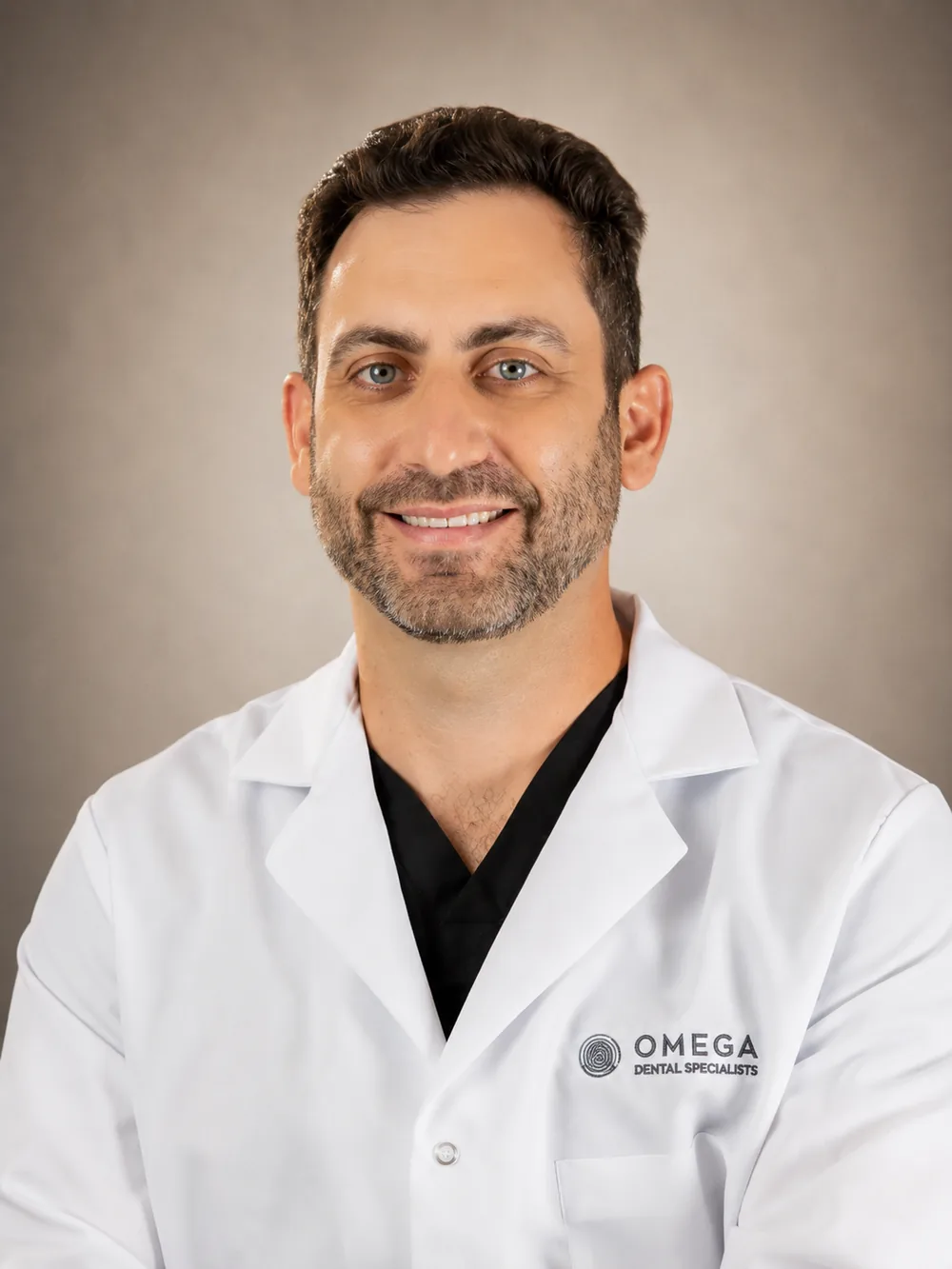
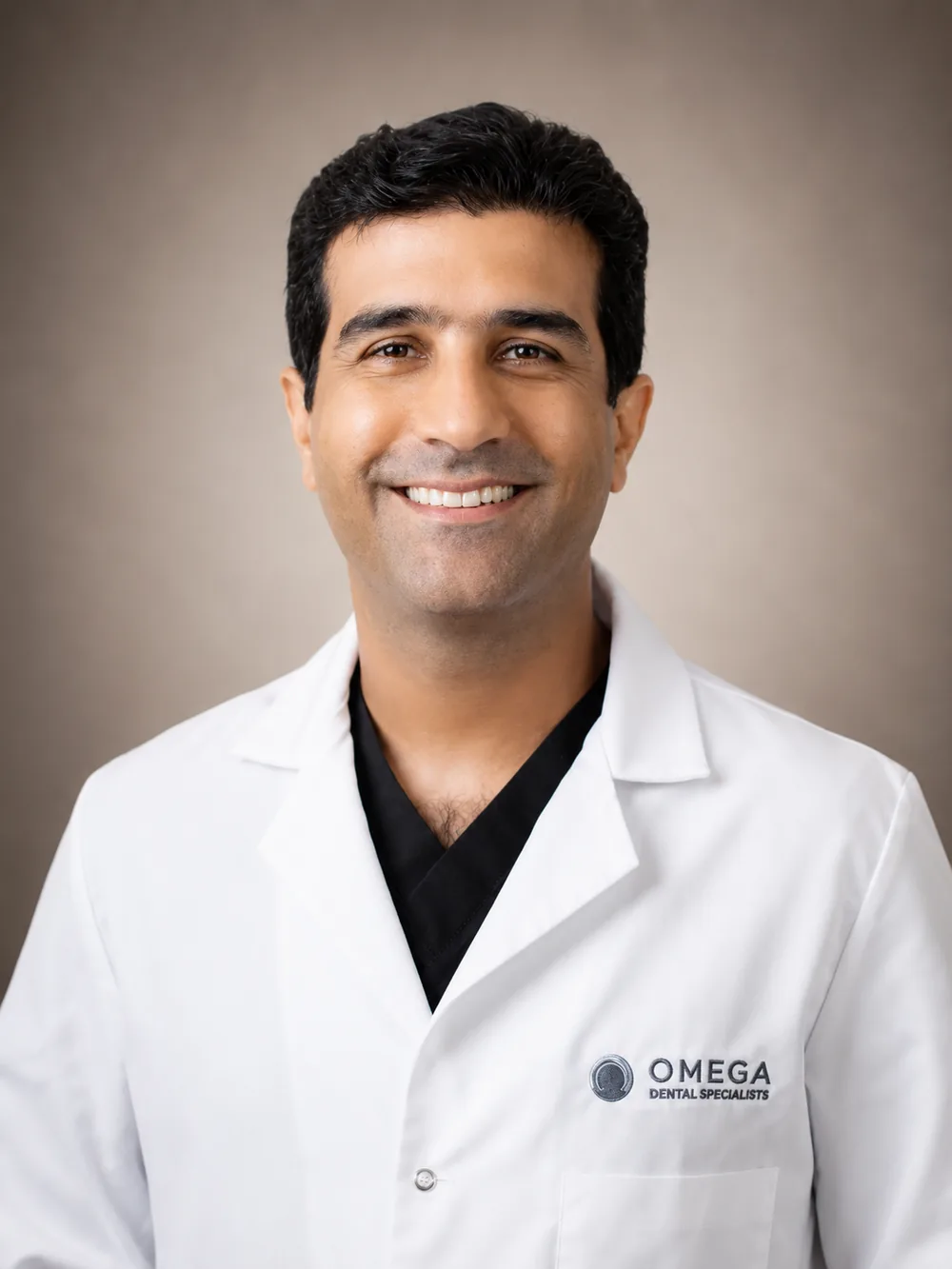
Frequently asked
How much do porcelain veneers cost in Houston?
Veneers at Omega start at $1,400 per tooth. Most patients do 6-10 veneers across the smile zone. We design the result in 3D before fabrication so you preview the final look before any tooth is touched.
How long does in-office whitening last?
Professional whitening results typically last 1-3 years depending on coffee/wine/smoking habits. We provide custom take-home trays so you can refresh the shade at home. Average lift: 6-8 shades from one 60-minute session.
Are veneers permanent?
Yes - a thin layer of enamel is removed to bond the veneer, so the change is permanent. Modern veneers last 10-20 years; you'd replace them at end-of-life much like a crown. We use the most conservative prep possible.
What's the difference between veneers and crowns?
Veneers cover only the front face of the tooth - used for cosmetic improvements. Crowns cover the whole tooth - used when the tooth itself is damaged. We choose based on what's right for your tooth, not what's most profitable.
Can I see my smile before committing?
Yes. Digital Smile Design lets us preview the final result with 3D imaging at the consultation. For larger cases we also fabricate a temporary 'mock-up' so you wear the new smile for a day before we proceed.
What drives the cost of cosmetic dentistry?
Two things drive a cosmetic total. How many teeth are in the plan, since veneers and bonding are priced per tooth, and whether anything needs repairing before the cosmetic layer goes on top. Eight veneers and two bonded chips are very different conversations. You get an itemized written quote before anything begins, and the smile design consultation is part of that process.
Be realistic about insurance. Purely cosmetic treatment is generally not a covered benefit. Where a case has a functional side, such as rebuilding a fractured tooth or replacing failing old restorations, part of it may be covered. We verify your benefits for free and tell you straight which portion, if any, your plan will pay.
Most patients finance the rest through Cherry, Affirm, or Sunbit, and we have an in-house membership plan if you are uninsured. Treatment can also be phased, starting with the teeth that show most. We are in Midtown Houston at 106 W Gray Street, open Monday to Friday 9am to 5pm and Saturday 9am to 3pm.
Related specialties
Ready to get started?
Book a consultation. We'll walk you through your options, your costs, and your timeline - no pressure.