All-on-4 Problems: Risks and Warning Signs
·
★ 4.7 · 1,000+ five-star reviews · Board-certified specialists · Open Saturdays
All-on-4 works for most patients who get it, and published survival rates over six to eleven years of follow-up are high. That is not the same as risk free. Here are the main complications, what the early warning signs look like, and what lowers your odds of running into them. The failure figures below come from published studies, not from our own cases.
Seen in Midtown Houston, Saturday hours: Book an appointment · (713) 322-7474 · Dental Implants in Houston
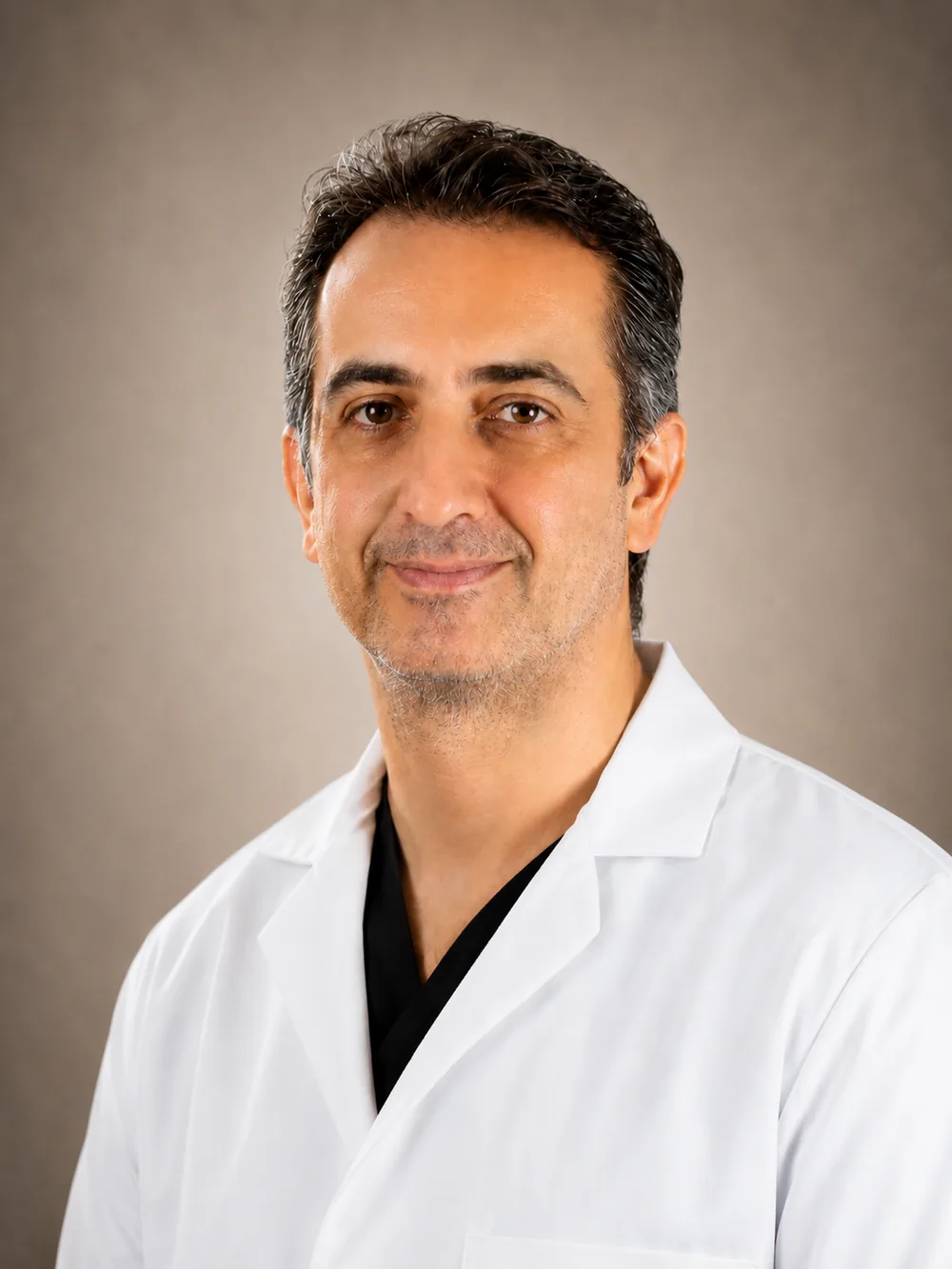
Medically reviewed by Dr. Pedram Bohluli, DDS, MS, PhD — Endodontist
Reviewed October 10, 2026
At Omega, Dr. Jonathan Rosenstein, board-certified oral & maxillofacial surgeon (ABOMS), handles dental implants.
An Implant That Never Integrates
The most common failure happens early. An implant is placed, and instead of bone growing onto the titanium and locking it in, the site heals with soft tissue around the post. It stays loose. In a 2021 review of All-on-4 studies, 2 to 6 implants in 100 were lost over six to eleven years. Across the studies, most failures came in the first year, and the reasons given were bone that never attached and infection.
What it feels like: the temporary bridge starts to move, or one area stays tender past the third or fourth week when everything else has settled down.
What makes it more likely:
• Smoking. Nicotine constricts the blood supply the bone needs to heal, and implant failure rates in smokers run substantially higher.
• Chewing hard food on the temporary bridge before integration is complete.
• Uncontrolled diabetes, or an A1c that nobody checked before surgery.
• Not enough bone density at the site, which a CBCT scan should have caught during planning.
A failed implant can usually be replaced. The post is removed, the site heals for a few months, sometimes with a bone graft, and a new implant goes in. That adds time to the treatment.
Peri-implantitis, the One That Shows Up Years Later
Peri-implantitis is gum disease around an implant. Bacteria collect where the bridge meets the tissue, the gum inflames, and if it continues, the bone around the implant recedes. Unlike a natural tooth, there is no ligament and no nerve to warn you, so it can advance further than you expect before it hurts.
Call us if you notice any of these:
• Gums around the bridge that are puffy, red or bleed when you clean
• A persistent bad taste or bad breath that brushing does not fix
• Pus at the gumline
• Any looseness or movement in the bridge
• Bone that looks like it has pulled back, leaving a visible gap under the bridge
Caught early it is treatable, sometimes with laser therapy or surgical cleaning by our periodontist, Dr. Shirin Farhadian. Caught late it means losing an implant. This is the single strongest argument for keeping your maintenance appointments after the case is finished.
The Prosthetic Problems Nobody Mentions Beforehand
The implants are titanium and rarely break. The bridge on top is where most long term problems live, and patients are often surprised because the consultation focused on the surgery.
• Chipped teeth. Acrylic bridges chip, especially in grinders. Repairs are usually straightforward but they are appointments you have to make.
• Loose screws. The bridge is screwed to the implants and screws can work loose over years. It is a short visit to remove, retighten and reseal, not a crisis, but ignoring a loose screw lets the bridge rock and stresses the implants.
• Fractured bridge. A long acrylic span can crack, more often in the upper arch and more often in heavy bites. Zirconia bridges resist this better and cost more.
• Wear. Acrylic teeth wear down over years and eventually the bridge needs replacing while the implants stay in place. Plan for it rather than being blindsided by it.
Ask before surgery what the bridge is made of and what a replacement costs. It is a fair question and any surgeon should answer it directly. We put the acrylic-hybrid and zirconia price bands side by side in our full mouth dental implants cost guide, so you know what a fair answer sounds like. Our standard final bridge is a hybrid, and zirconia is a quoted upgrade.
Living With It: Speech, Cleaning and Food
The adjustment period is real and gets glossed over.
An upper bridge changes how your tongue meets your palate, and most patients lisp for a week or two. It resolves. Reading out loud speeds it up.
Cleaning under the bridge is a new skill. There is a small space between the bridge and your gum, and food gets in. A water flosser is not optional equipment with a full arch, it is the main tool. Patients who cannot or will not clean under the bridge are the ones who develop peri-implantitis.
You will feel bite pressure differently. Implants have no ligament, so there is no fine feedback about how hard you are biting. Most people adapt within a couple of months, but it is why cracking ice or biting a chicken bone is a much worse idea than it was with natural teeth.
And there is an emotional side to losing your remaining teeth in a single day. Surgeons who pretend otherwise are not being straight with you.
Surgical Risks Worth Knowing Before You Consent
These are uncommon, and your consent form will list them. Read it before you sign it rather than in the chair.
• Nerve injury in the lower jaw, which can leave numbness or tingling in the lip or chin. Usually temporary, occasionally not. CBCT planning exists specifically to map the nerve and avoid it.
• Sinus involvement in the upper jaw, where an implant approaches or enters the sinus floor.
• Bleeding, bruising and swelling. Expected, not a complication, but heavier than most patients anticipate.
• Infection at a surgical site.
• Reactions to anesthesia or prescribed medication. Give a complete medication and allergy history, including supplements.
• Delayed healing, which is more likely with smoking, diabetes, certain bone medications and some autoimmune conditions.
Any surgeon who will not discuss these openly is telling you something about how they practice.
What Actually Reduces Your Risk
Five things, in order of how much they matter.
Stop smoking, at minimum for the weeks before and the months after surgery.
Insist on CBCT planning. A 3D scan shows bone volume, density, nerve position and sinus anatomy. Placing full arch implants from a flat X-ray is planning by guess. The 3D CBCT scan is taken at your consultation.
Check who is holding the drill. This is oral surgery. Ask how many full arch cases the surgeon does, and whether they will be the one placing the implants and following you afterward.
Eat soft food for the entire healing period. Not most of it.
Keep your maintenance appointments. Full arch patients need the bridge professionally cleaned, and periodically removed and cleaned underneath, on a schedule. Skipping years of that is how a case that went perfectly ends up in trouble at year seven.
Getting a Second Opinion in Houston
If you already have All-on-4 and something feels wrong, or you have a treatment plan from elsewhere and want another read on it, we see both regularly at Omega Dental Specialists in Midtown Houston.
Bring your CBCT scan if you have it, or we will take one. Bring the treatment plan and the itemized fee schedule. We will tell you what we would do differently and why, and if the plan you already have is sound, we will tell you that too.
Our oral surgeons are Dr. Jonathan Rosenstein, board certified and a Diplomate of the American Board of Oral and Maxillofacial Surgery, and Dr. Edmund Watkins, and our periodontist, Dr. Shirin Farhadian, places full-arch implants too. The teeth that go on the implants are designed and fitted by our prosthodontist, Dr. Nisa Dadjoo, or by Dr. Mohsen Khobyari, who has restored more than 10,000 implants. Current per-arch fees are on our All-on-4 page.
We are at 106 W Gray St in Midtown, with Saturday appointments. Call (713) 322-7474 or book online.
Frequently asked
How often do All-on-4 implants fail?
Between 2 and 6 implants in 100 over six to eleven years, according to a 2021 review of All-on-4 studies. Most failures come in the first year after surgery. A single failed implant does not usually end the case. The post is removed, the site heals for a few months, sometimes with a bone graft, and a replacement implant goes in.
What are the warning signs of a failing All-on-4?
Movement in the bridge, tenderness at one site that persists past the first month, gums that are puffy, red or bleeding around the bridge, a bad taste or persistent bad breath, pus at the gumline, or a visible gap where the bone appears to have pulled back. Any of these warrants a call to your surgeon rather than a wait and see approach.
Can All-on-4 implants get gum disease?
Yes. It is called peri-implantitis and it is inflammation and bone loss around the implant caused by bacteria at the gumline. It is a common cause of implant loss years after a successful case. Implants have no nerve and no ligament, so it can progress further than you would expect before it becomes painful, which is why maintenance visits matter more, not less, than with natural teeth.
Does smoking affect All-on-4 success?
Significantly. Nicotine constricts the blood vessels that supply the healing bone, and implant failure rates in smokers run substantially higher than in non smokers. If you are not willing to stop permanently, stopping for the weeks before surgery and the months of healing afterward still meaningfully improves your odds. Tell your surgeon the truth about it so the plan accounts for it.
Can the bridge on All-on-4 implants break?
The acrylic teeth can chip and a long span can fracture, most often in the upper arch and most often in patients who grind. Screws holding the bridge to the implants can also work loose over the years. These are repairs rather than disasters, but they are appointments you should expect. Zirconia bridges resist chipping better and cost more, so ask which material your plan includes.
Will I have a lisp after getting All-on-4?
Most patients with an upper arch bridge notice some change in speech for one to two weeks, because the bridge alters how the tongue meets the palate. It resolves for the large majority, and reading out loud for a few minutes a day noticeably speeds it up. If a lisp persists past a month, the bridge contour can often be adjusted.
Can a failed All-on-4 be fixed?
Usually yes. A single implant that has not integrated is removed, the site is allowed to heal, sometimes with a bone graft, and a new implant is placed. Peri-implantitis caught early can be treated by a periodontist. Prosthetic problems are repaired or the bridge is remade. The cases that are hard to rescue are the ones where the bone has been lost around several implants over years, which is why early signs should never be ignored.