Before Your Root Canal: How to Prepare
·
★ 4.7 · 1,000+ five-star reviews · Columbia- and UTHealth-trained endodontists · Open Saturdays
A root canal appointment goes better when you have done four things: eaten beforehand, told us about your medications, booked enough time, and sorted out the crown that comes afterward. None of that is complicated, and most of it is the sort of thing nobody tells you until you are already in the chair. Here is the whole list.
Seen in Midtown Houston, Saturday hours: Book an appointment · (713) 322-7474 · Endodontics in Houston
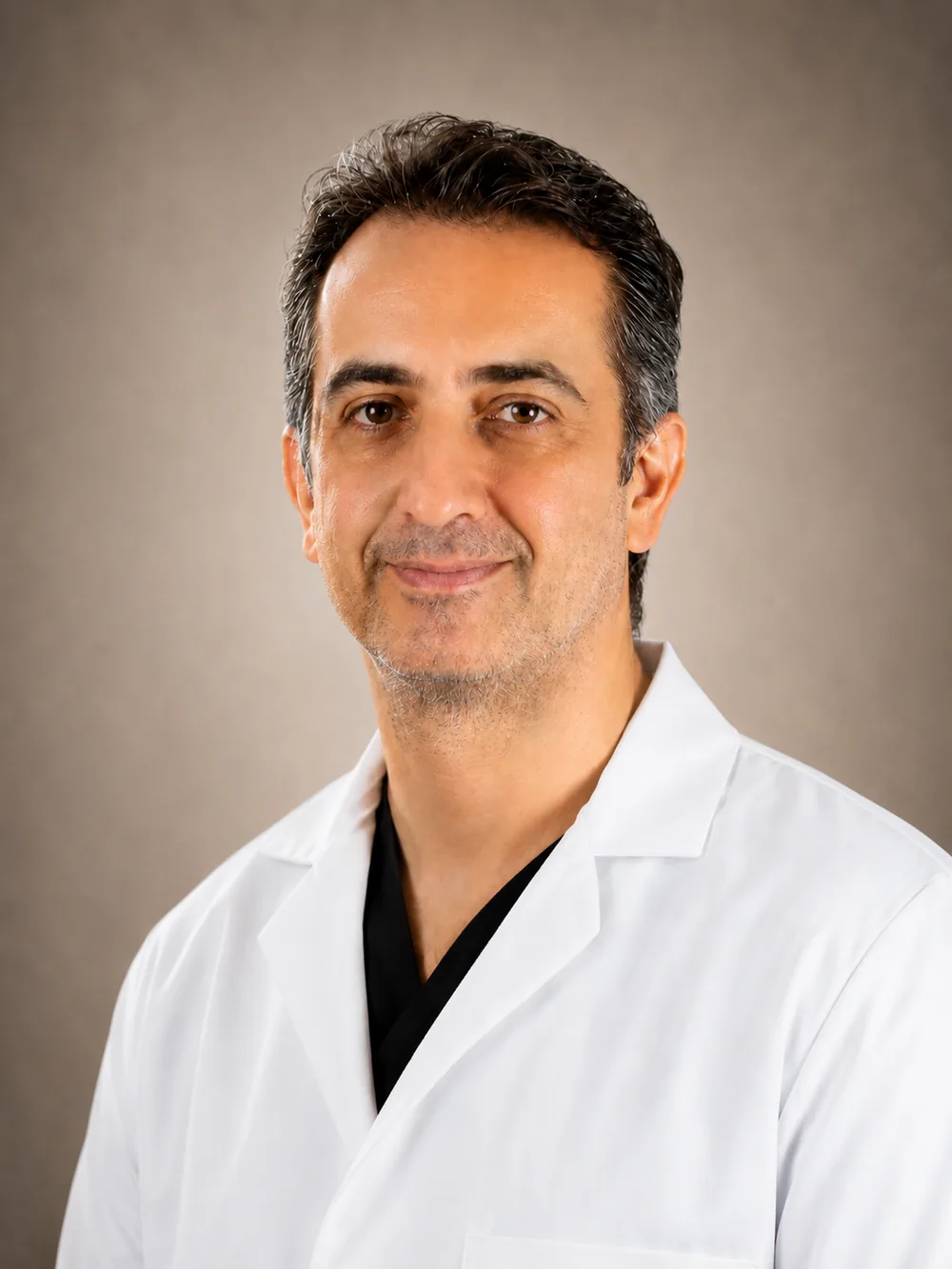
Medically reviewed by Dr. Pedram Bohluli, DDS, MS, PhD — Endodontist
Reviewed October 10, 2026
At Omega, Dr. Pedram Bohluli and Dr. Parastou Terrany, endodontists, handle endodontics.
The Day Before and the Morning Of
Eat a proper meal before you come. You will be numb for two to three hours afterward and chewing on a numb lip is how people bite themselves. A sitting with local anesthetic has no fasting requirement, so unless you are having IV sedation, eat normally.
If you are having IV sedation, that is different and we will give you a fasting window, usually nothing from midnight.
Take your usual medications as prescribed unless we have told you otherwise.
Skip alcohol the night before. It interacts with anesthetic and with the pain medication you may take afterward, and it worsens post treatment swelling.
Sleep matters more than you would think. Coming in exhausted after a night of toothache makes a long appointment considerably harder. If the pain has kept you up, say so when you arrive, because we can adjust how the appointment is run.
Caffeine is fine but go easy. A double espresso before 90 minutes of sitting still is not doing you any favors.
What to Tell Us Before We Start
Tell us about every medication and supplement, any heart condition, joint replacement or other reason a physician has advised antibiotics before dental work, pregnancy, diabetes, any reaction to local anesthetic or time an injection failed to numb you, recreational drug use, and any latex allergy. None of it is judged.
• Every medication, including over the counter and supplements. Blood thinners, bisphosphonates and other bone medications, and immunosuppressants all change the plan.
• Heart conditions, joint replacements, or any history where a physician has advised antibiotic premedication before dental work. This has to be arranged in advance, not discovered on the day.
• Pregnancy, or if you might be. Root canal treatment during pregnancy is generally safe and often necessary, but it changes imaging and medication choices.
• Diabetes, and roughly where your control sits.
• Any previous reaction to local anesthetic, and any time an injection has failed to numb you properly. This one directly affects how we plan the anesthesia.
• Recreational drug use, particularly stimulants, which genuinely affect anesthetic safety.
• Latex allergy, because of the rubber dam.
Bring the medication list rather than trying to remember it.
How Long to Book Off
The appointment itself runs 60 to 90 minutes for most teeth. Molars with four canals take longer than an incisor with one, and a retreatment takes longer than a first treatment.
Most people go back to work afterward. The tooth is tender rather than debilitating, and the numbness is the main nuisance for the first few hours.
Book the rest of the day off if you are having IV sedation, because you will not be driving or working, or if the tooth has been badly infected and you have been in significant pain, since those appointments tend to run longer and you will be tired afterward.
A morning appointment is worth requesting if you are anxious. Spending a whole workday anticipating it is its own kind of misery.
Arrange a driver only for sedation. Local anesthetic alone does not affect your ability to drive.
Our timing guide shows how long it will take for each type of tooth.
What Happens at the Appointment
So it is not a surprise, and the sequence matches the AAE's step-by-step guide:
X rays first, if we do not already have recent ones, and on most cases a CBCT scan, including every molar and every retreatment.
Local anesthetic, then a few minutes to let it take hold. We test the tooth before starting rather than assuming.
A rubber dam goes over the tooth. It is a small latex or latex free sheet held by a clamp, and it keeps saliva out of the canals. It also means you can swallow normally throughout, which surprises people.
An opening is made through the top of the tooth. The infected pulp comes out, the canals are cleaned and shaped with fine instruments, irrigated, and dried.
The canals are sealed and a temporary filling goes on top.
Most teeth are finished in one visit. Some, particularly badly infected ones, are done across two with medication left inside between visits.
Will You Need Antibiotics Afterward?
Usually not. The root canal itself removes the infected tissue, so a well-done root canal on a tooth without spreading infection typically needs no antibiotics; they are prescribed selectively, for facial swelling, fever or a draining abscess, or before treatment for a few medical conditions. The full explanation, including what to take for pain instead, is in our guide to antibiotics after a root canal.
Plan the Crown Before You Start, Not After
Know who will place the crown, when, and what it costs before the root canal starts.
A molar that has had a root canal has lost a lot of its inner structure, and the less tooth is left, the more it flexes under a bite and the likelier it is to break. With only a filling on top instead of a crown, a root canal treated molar was nearly three times as likely to break beyond repair in one study, with the gap showing up mainly in the first two years, and a tooth that breaks that way cannot be saved.
Skipping the crown is the most common way patients lose a tooth they already paid to treat.
If cost is the reason for a delay, tell us at the planning stage, because financing the crown costs a great deal less than replacing the tooth with an implant later.
At Omega the crown can be placed right after the root canal treatment, so the tooth isn't left for weeks on a temporary filling.
What to Have at Home Before You Go
Get these before the appointment, not on the way home while numb.
• Ibuprofen and acetaminophen. Taken together at standard over the counter doses, if you can safely take both, they control post treatment tenderness better than either alone.
• Soft food for two or three days. Soup, eggs, pasta, yogurt.
• Any prescription we have sent, filled in advance.
• An ice pack, if the tooth was swollen going in.
• An extra pillow, since sleeping slightly elevated helps for the first night or two.
And know the number for after hours. Ours is the same one: (713) 322-7474.
Have the Costs in Writing First
You should walk in knowing the number. The average cost of a root canal in Houston moves with which tooth is being treated, since a molar with extra canals takes more time than an incisor with one, and with whether it is a first treatment, a retreatment of a previous root canal, or an apicoectomy. IV sedation, if you choose it, is charged per appointment. At Omega Dental Specialists a new-patient exam with X-rays is what produces your exact figure, in writing, before anything begins; call us for today's fee.
The crown afterward is quoted at your consultation, because the material and the amount of build up needed change the figure.
We verify your benefits with your insurer before treatment and give you your share in writing. Cherry, Affirm and Sunbit split the balance into monthly payments. What moves the total is covered in our root canal cost guide.
Our endodontists are Dr. Pedram Bohluli, Columbia trained in endodontics, with a Master’s and PhD in Biomedical Engineering and more than 20 years in practice, and Dr. Parastou Terrany. We are at 106 W Gray St in Midtown, with Saturday appointments and same day slots for emergencies. You do not need a referral.
Call (713) 322-7474 or book online.
Frequently asked
Can I eat before a root canal?
Yes, and you should. There is no fasting requirement for treatment under local anesthetic, and you will be numb for two to three hours afterward, so eating beforehand is easier than eating after. The exception is IV sedation, which requires a fasting window we will give you, usually nothing to eat or drink from midnight.
What should I tell my dentist before a root canal?
Every medication including over the counter drugs and supplements, especially blood thinners and bone medications; any heart condition or joint replacement where a physician has advised antibiotic premedication, which must be arranged in advance; pregnancy or possible pregnancy; diabetes; any previous failure of local anesthetic to numb you; and latex allergy, because of the rubber dam.
How long does a root canal appointment take?
Sixty to ninety minutes for most teeth. A molar with four canals takes longer than a front tooth with one, and retreatment of a previous root canal takes longer than a first treatment. Most teeth are completed in a single visit, though badly infected ones are sometimes done across two with medication left inside the tooth in between.
Can I go back to work after a root canal?
Most people do. The tooth is tender rather than debilitating and the numbness is the main nuisance for the first few hours. Take the rest of the day off if you are having IV sedation, since you will not be driving or working, or if the tooth was badly infected and you have been losing sleep to pain.
Do I need antibiotics before a root canal?
Not routinely. Antibiotics before dental treatment are for specific medical situations, such as certain heart conditions or joint replacements where your physician has advised premedication, and that has to be arranged before the appointment rather than discovered on the day. Antibiotics are also prescribed when there is active spreading swelling, alongside treatment rather than instead of it.
Do I need a crown after a root canal?
On a back tooth, yes, and it should be planned before the root canal rather than after. A treated molar has lost much of its inner structure, and in one study molars with only a filling on top were nearly three times as likely to break beyond repair as crowned ones. Skipping the crown is the most common way patients lose a tooth they already paid to treat.