Tooth Extraction Cost in Houston: 2026 Fees
·
★ 4.7 · 1,000+ five-star reviews · Board-certified specialists · Open Saturdays
The cost of a tooth extraction in Houston comes down to how the tooth has to come out: a simple extraction is one flat fee, a surgical one costs more, and wisdom teeth are priced per tooth. Sedation and a socket graft are separate choices. We put today's exact fees in writing before treatment: (713) 322-7474.

Seen in Midtown Houston, Saturday hours: Book an appointment · (713) 322-7474 · Oral Surgery in Houston

Medically reviewed by Dr. Pedram Bohluli, DDS, MS, PhD — Endodontist
Reviewed August 31, 2026
Tooth Extraction Cost in Houston, by Type
A simple extraction is $420 at our Midtown Houston office and a wisdom tooth is $450 per tooth, against typical Houston pricing of $75 to $650 for an extraction depending on complexity.
• Tooth extraction, simple: one flat fee.
• Tooth extraction, surgical: more than a simple one, quoted after the X-ray.
• Wisdom teeth removal: its own fee, per tooth.
• IV sedation, if you would rather be asleep: charged once for the appointment, not per tooth.
• Socket-preservation graft, only if the socket is damaged: a separate line item.
Local anesthetic is included in the extraction fee. You will not be charged separately for being numb.
We put today's exact figures in writing before treatment - call (713) 322-7474 for the current fees. If several teeth are coming out in one visit, the sedation is charged once rather than per tooth. That is part of why doing them together is usually less expensive than spreading them out.
| Procedure | Typical Houston range | Our fee |
|---|---|---|
| Simple tooth extraction | $75–$650 by complexity | $420 |
| Wisdom tooth removal, per tooth | $200–$1,100 by impaction | $450 |
| Bone graft at extraction (socket preservation) | $250–$1,200 | $650 |
| IV sedation | $500–$2,000 per visit nationally | $2,000 flat / appointment |
Every fee is itemized in writing before you commit: (713) 322-7474.
Why a Surgical Tooth Extraction Costs More
The biggest single factor is how the tooth has to come out.
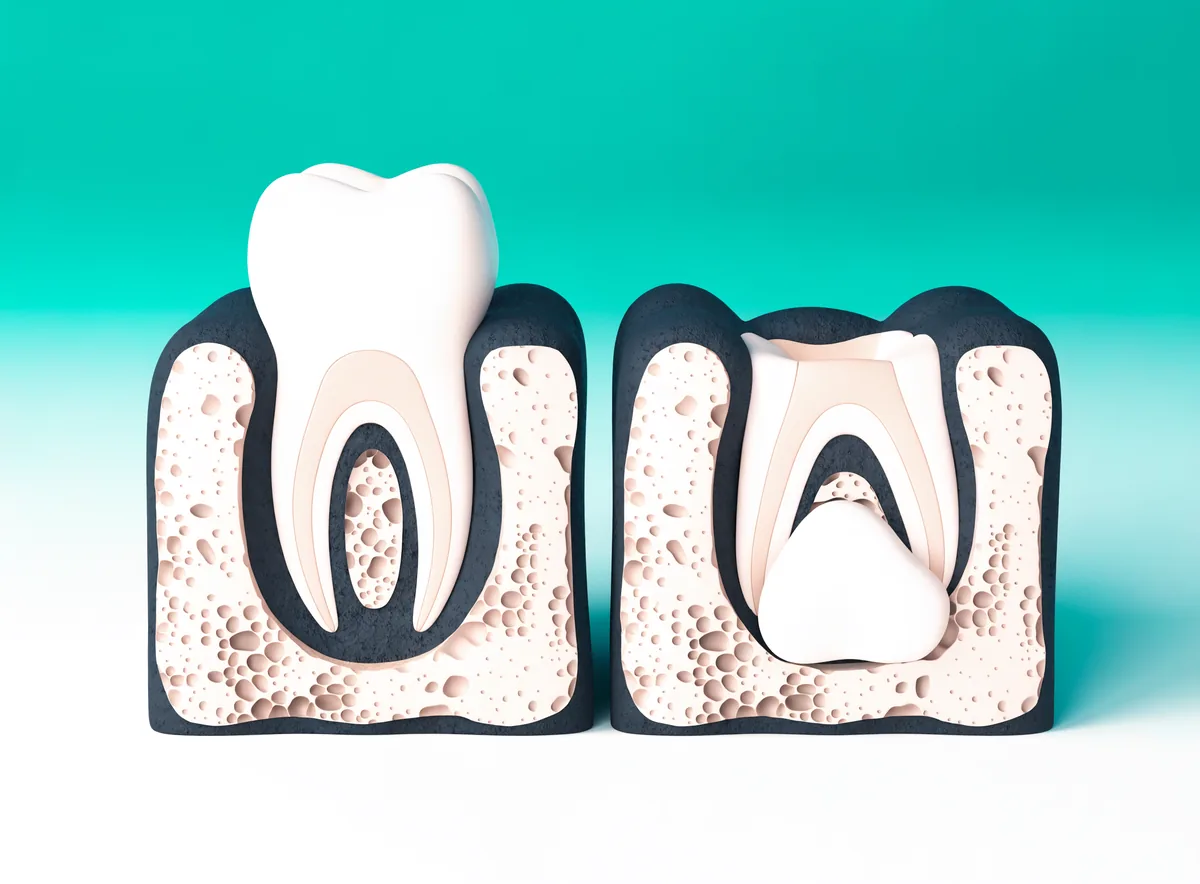
A simple extraction is a tooth that is fully erupted and can be loosened and lifted out with instruments. Most front teeth and many premolars fall here.
A surgical extraction is a tooth that is broken at the gum line, impacted under bone or gum, or has curved or splayed roots. It may need a small incision, sometimes removal of a little bone, and often sectioning the tooth into pieces to bring it out without damaging what is around it. Wisdom teeth and molars are more often surgical.
Surgical removal takes longer and takes more technique. That is why it is priced above a simple extraction, and why wisdom teeth are priced separately, per tooth. What the scan shows before we start is what determines which category your tooth falls into, not a guess from looking at it.
What else changes the number
Sedation is the main optional variable. Local anesthetic is included. IV sedation is a choice rather than an assumption, and it is charged per appointment.
Infection can change the sequence. A tooth that is actively infected sometimes needs antibiotics before it can be safely and comfortably removed, which adds a step rather than a large cost.
How many teeth come out in one visit affects the total but usually reduces the cost per tooth, particularly where sedation is involved.
Whether the socket needs a graft is something most people have not thought about before arriving. We check it on the X-ray at the extraction, and it gets its own section below.
Do You Need a Bone Graft After a Tooth Extraction?
This is the part of extraction pricing that actually matters, and it is rarely explained before treatment.
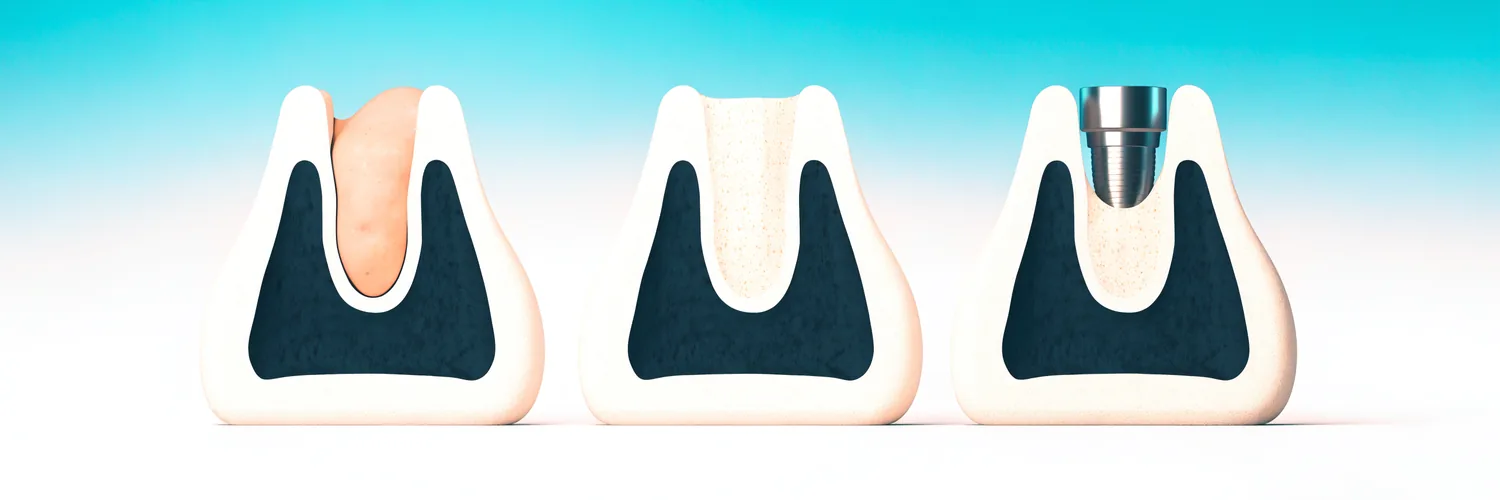
When a tooth comes out, the bone that held its root begins resorbing almost immediately, quickest in the first few months. If you intend to replace that tooth with an implant later, that bone is what the implant needs to sit in. The Cleveland Clinic's patient guidance describes the same sequence: the jaw starts losing volume once a tooth is gone, and a graft placed in the socket preserves it.
A socket-preservation graft goes in only when the socket is damaged, either by infection or because too little bone was left after the extraction, and we check that on the X-ray. When it is needed, a graft placed into the socket at the time of extraction preserves the ridge while it heals, and it is a fraction of the cost of the implant it protects. Skip it on a damaged socket, come back in three years wanting an implant, and you may need a larger, more involved graft, plus a longer healing period before the implant can be placed at all.
If the socket is intact, no graft is needed, and we will say so.
Our oral surgeons plan extractions with what comes next in mind, which is the point of having the surgeon and the restorative dentist in the same building.
If a denture is the plan instead of an implant, our guide to dentures cost in Houston covers full and partial fees.
Tooth Extraction Cost With Insurance
It depends entirely on your policy. Extractions are more commonly covered than elective treatment, because they are usually clinically necessary rather than chosen. But the share your plan pays, and whether a deductible or waiting period applies, are specific to your policy.
Annual maximums matter here if several teeth are coming out, since they cap what a plan pays in a year regardless of what treatment costs.
Some plans process surgical extractions under medical rather than dental benefits, particularly for impacted wisdom teeth, which occasionally works in your favor and is worth checking.
We contact your insurer before treatment, confirm what your specific policy will do, file the claim for you, and give you your out of pocket share in writing beforehand. That check is free.
Tooth Extraction Cost Without Insurance
Cherry, Affirm and Sunbit spread the balance into monthly payments, with 0% APR plans available through Affirm and Cherry for those who qualify.
FSA and HSA funds apply and are pre tax.
Our in-house membership plan is a flat annual fee and covers exams, cleanings and X rays, with 15% off fillings, crowns, implants and oral surgery. The discount applies to an extraction, but the plan is not insurance and does not cover the treatment.
Texas Medicaid covers extractions for children under 21 and for adults in emergencies. Coverage for routine adult extractions is limited. Contact your Medicaid provider to verify your specific benefits and the current criteria before scheduling.
The most reliable saving is timing. A tooth treated while it is a problem is a planned, predictable fee. The same tooth after it becomes an abscess is an emergency visit, often antibiotics, sometimes a spreading infection, and the extraction anyway.
Does Getting a Tooth Pulled Hurt?
Removing one tooth usually takes between 30 and 60 minutes, which matches the Cleveland Clinic's estimate: a simple extraction sits at the short end of that range and a surgical one at the long end. The area is numbed, the tooth is loosened and removed, and you should feel pressure but not pain.
Afterward, bite on the gauze, and let the clot form. For the first twenty four hours, no straws, no smoking, no vigorous rinsing and no spitting, because dislodging the clot is what causes dry socket, and dry socket is considerably more unpleasant than the extraction was. The Mayo Clinic lists the same culprits we warn every patient about: suction, smoking, and hard rinsing while the clot is forming.
Ice for the first day, soft food, and gentle warm salt water rinses from day two.
Call us rather than waiting if pain increases sharply around day three, if you taste or smell something bad, or if bleeding restarts and will not settle. More detail in our dry socket guide and on what to expect from an extraction.
Extractions in Midtown Houston
Extractions here are done by oral and maxillofacial surgeons. Dr. Jonathan Rosenstein is board certified and a Diplomate of the American Board of Oral and Maxillofacial Surgery, and Dr. Edmund Watkins also practices oral and maxillofacial surgery here.
We are at 106 W Gray Street in Midtown, between Downtown and the Texas Medical Center, with parking on site. Patients come from Montrose, River Oaks, the Heights, EaDo and the Museum District.
Monday to Friday 9 to 5 and Saturday 9 to 3, with same-day emergency slots kept open on weekdays. The Saturday hours are mainly for consultations and follow-ups, and an extraction can sometimes be done on a Saturday; ask when you book.
Call (713) 322-7474 or book online. More on oral surgery and wisdom teeth removal in Houston.
Frequently asked
How much does a tooth extraction cost in Houston?
The average cost of a tooth extraction in Houston depends mostly on how the tooth has to come out. At Omega Dental Specialists a simple extraction is one flat fee, a surgical one is priced above it and quoted after the X-ray, and wisdom teeth carry their own per-tooth fee. Local anesthetic is included, IV sedation is charged per appointment rather than per tooth, and a socket graft is a separate line item. Today's exact figures are put in writing before treatment - call (713) 322-7474. Today that means $420 for a simple extraction and $450 per wisdom tooth, against typical Houston pricing of $75 to $650 by complexity.
Why is wisdom teeth removal so expensive?
Because they are more often surgical. A wisdom tooth is frequently impacted under bone or gum, or has curved roots, so removal may need a small incision, sometimes removal of a little bone, and often sectioning the tooth to bring it out safely. That takes longer and takes more technique than lifting out a fully erupted tooth, which is why wisdom teeth carry their own per-tooth fee above a simple extraction.
Should I get a bone graft when a tooth is extracted?
Only if the socket is damaged. We check that on the X-ray when the tooth comes out. The bone that held the root starts resorbing as soon as the tooth is gone, quickest in the first months, and in a damaged socket a graft placed at the extraction preserves the ridge for a fraction of the cost of the implant it makes possible. If the socket is intact, no graft is needed, and we will tell you plainly which situation you are in.
Does insurance cover tooth extractions?
It depends on your policy. Extractions are more commonly covered than elective treatment because they are usually clinically necessary, but the share paid, the deductible and any waiting period are specific to your plan. Annual maximums matter if several teeth are coming out. Some plans process surgical extractions under medical rather than dental benefits. We verify your benefit with your insurer at no charge and give you your share in writing.
Does Medicaid cover tooth extractions in Texas?
Texas Medicaid covers extractions for children under 21 and for adults in emergency situations. Coverage for routine adult extractions is limited. Contact your Medicaid provider to verify your specific benefits and the current criteria before scheduling, since the details change and depend on your plan.
Is it less expensive to have several teeth out at once?
Usually, per tooth. The extractions themselves are priced individually, but IV sedation is charged per appointment rather than per tooth, so having them done together rather than across separate visits avoids paying for sedation more than once. It also means one recovery period instead of several, which most people find matters more than the money.
What happens if you wait too long to pull a tooth?
A tooth that needs removing does not improve on its own, and the cost of waiting is usually not the extraction fee. An untreated infected tooth can abscess, which turns a planned, predictable procedure into an emergency visit, antibiotics, and sometimes a spreading infection that is genuinely serious. If a tooth is painful or infected, calling sooner is both less expensive and safer.
How much does a molar extraction cost in Houston?
It depends on how the molar has to come out. A fully erupted molar that lifts out with instruments is a simple extraction at $420. Molars with curved roots, or ones broken at the gum line or impacted, are surgical and quoted after the X-ray; wisdom teeth are $450 per tooth. Around Houston, extractions typically run $75 to $650 by complexity. Call (713) 322-7474 for today's fee in writing.
How much is a tooth extraction without insurance in Houston?
Without insurance, a simple extraction is $420 at our Midtown Houston office and a wisdom tooth is $450 per tooth; a surgical extraction is quoted after the X-ray. Around Houston, extractions typically run $75 to $650. Cherry, Affirm and Sunbit can split the balance into monthly payments with nothing down, and we put today's fee in writing before treatment: (713) 322-7474.
How much does an oral surgeon charge to pull a tooth?
At our Midtown Houston office the fee follows the tooth, not the title: a simple extraction is $420, a wisdom tooth is $450 per tooth, and a surgical extraction is quoted after the X-ray, because the scan decides how the tooth has to come out. IV sedation, if you want it, is $2,000 per appointment. We put today's figures in writing first: (713) 322-7474.
Can a dentist pull a rotten or broken tooth?
Yes. A tooth that has broken at the gum line or crumbled from decay usually needs a surgical extraction rather than a simple one, because there is not enough solid tooth left to grip. That is what moves an extraction from the $420 simple fee into surgical territory, quoted from your X-ray. Our oral surgeons handle broken-down teeth every week, and the exam tells us which type yours is before anything is scheduled. If it needs to happen today, our emergency tooth extraction page covers how same-day works.
What is the least expensive way to get a tooth pulled?
For a tooth that qualifies, a simple extraction at $420 is the floor here, and local anesthetic is included. Be careful comparing that against lowball ads: a teaser price that leaves out the exam, the X-ray or a difficult root can end up costing more than a written all-in quote. We put the complete figure on paper before you sit down, so the number you approve is the number you pay.