Do I Need Sedation for Wisdom Teeth Removal?
·
★ 4.7 · 1,000+ five-star reviews · Board-certified specialists · Open Saturdays
No, sedation is not required for every wisdom tooth. A single erupted tooth comes out under local anesthetic in about ten minutes and plenty of patients do exactly that. Four impacted teeth in one appointment is a different proposition, and that is where IV sedation, charged as a single per-appointment fee at our Midtown Houston office, earns its place. Here is how to decide which one you actually need.
Seen in Midtown Houston, Saturday hours: Book an appointment · (713) 322-7474 · Sedation Dentistry in Houston
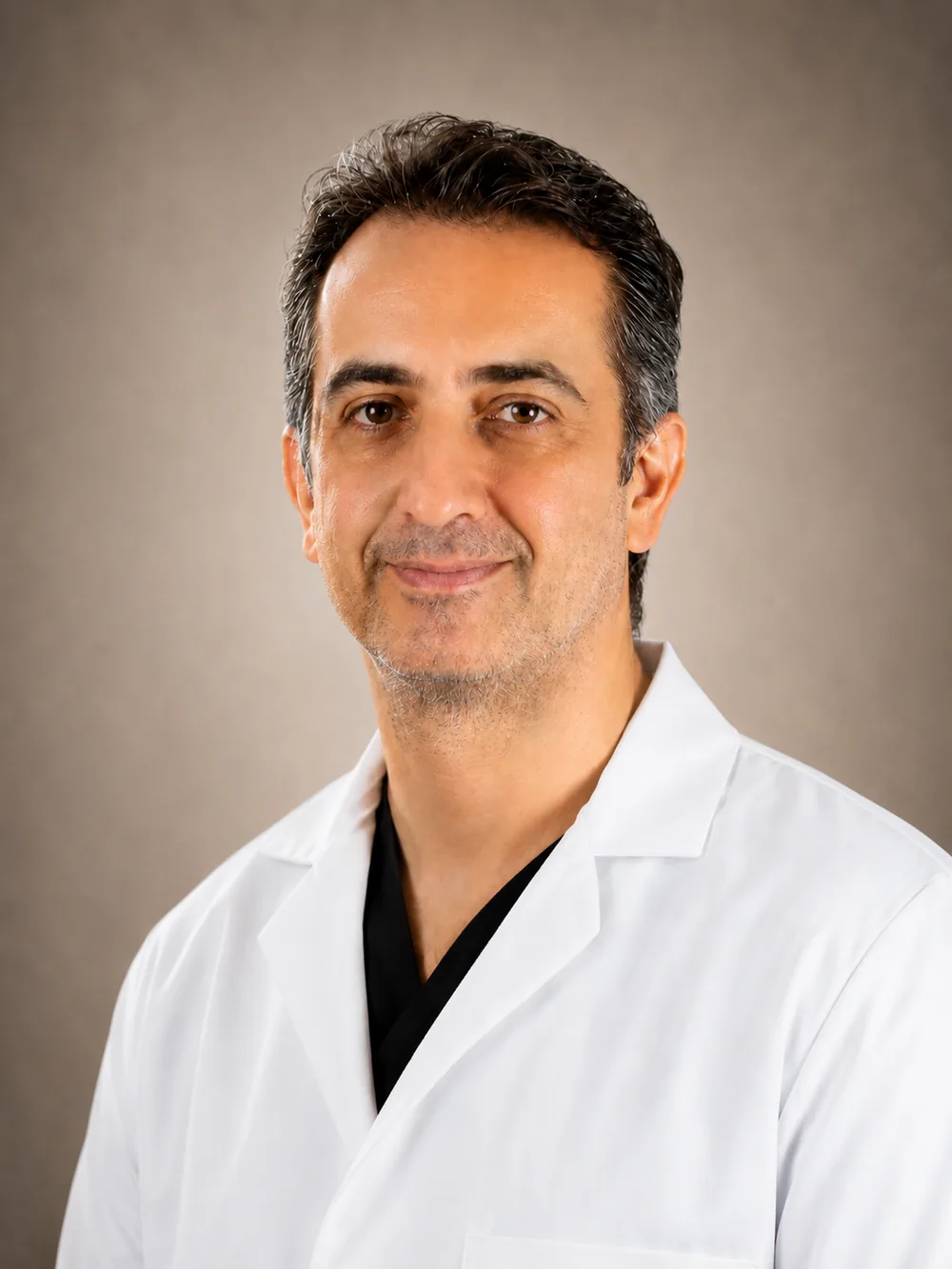
Medically reviewed by Dr. Pedram Bohluli, DDS, MS, PhD — Endodontist
Reviewed October 10, 2026
At Omega, Dr. Jonathan Rosenstein, board-certified oral & maxillofacial surgeon (ABOMS), handles sedation dentistry.
The Four Options
• Local anesthetic alone. You are fully awake and the area is completely numb. Most patients feel pressure and movement, not pain. No fasting, no driver, no extra cost. Right for straightforward extractions in patients who are not anxious.
• Nitrous oxide, laughing gas. Inhaled through a small nose mask alongside local anesthetic. You stay awake and aware but noticeably calmer, and it wears off within minutes of the mask coming off, so most people drive themselves home. Good for mild anxiety.
• Oral sedation. A tablet taken before the appointment, usually a benzodiazepine, on top of local anesthetic. You will be drowsy, may remember little, and you need someone to drive you both ways. The depth is harder to control than IV, because once the tablet is swallowed it cannot be adjusted.
• IV sedation. Medication delivered through a vein, titrated in real time. Most patients have no memory of the procedure. Breathing continues on its own and you can respond to instructions, though you are unlikely to recall doing so. Fasting and a driver are required. It is charged once for the appointment, not per tooth.
General anesthesia, fully unconscious with airway support, is kept for specific cases; at Omega our visiting physician anesthesiologist gives it.
Which One Your Case Actually Needs
Three things decide it: how difficult the surgery is, how anxious you are, and your medical history.
Local alone is reasonable when: one or two teeth, fully erupted, straightforward roots, and you are comfortable in a dental chair.
Nitrous is a good middle when: you get nervous but not panicked, the surgery is not complex, and you would rather not organize a driver.
IV sedation is the sensible choice when:
• All four are coming out in one appointment. This is the most common reason and it is a good one.
• Any tooth is impacted in bone, requiring the tooth to be sectioned and bone removed.
• A root sits close to the inferior alveolar nerve, where the surgeon needs an entirely still patient.
• You have real dental anxiety, a strong gag reflex, or difficulty staying open for long periods.
• You have had a bad experience before.
We will tell you which one your case calls for after the X ray. If a straightforward extraction does not need sedation, we will say so rather than adding it to your bill.
What IV Sedation Costs and What It Is Like
IV sedation is one flat fee per appointment, however many teeth come out. Wisdom tooth removal is priced per tooth, so doing all four in one visit means paying for sedation once and recovering once. A socket-preservation graft, placed only when the socket is damaged, is a separate line item. Call (713) 322-7474 for today's exact figures, quoted in writing after the X-ray. If you'd like a fuller breakdown before you call, we've written up what IV sedation costs in its own guide.
Local anesthetic is included in the extraction fee; nitrous oxide is a separate charge. The removal fee itself, and what moves it from a simple pull to a surgical extraction, is laid out in our wisdom teeth removal cost guide.
What happens on the day: a small cannula in the back of the hand or the arm. The medication goes in over a minute or two, and most people describe a warm heaviness and then nothing. The next thing you are aware of is being told it is finished.
You were breathing on your own the whole time, and you were responsive during the procedure. Most patients remember little or nothing of it, which for anxious patients is precisely the point.
Afterward you will be groggy for a few hours. Someone drives you home and you spend the rest of the day on the sofa. No driving, no work, no signing anything important for 24 hours.
Is It Safe
Office based IV sedation for oral surgery has a strong safety record when the right people and the right monitoring are involved. What matters is who is administering it.
Oral and maxillofacial surgeons complete four to six years of hospital based residency that includes anesthesia training, and they are one of the few groups in dentistry credentialed to deliver and monitor deep sedation. At our office IV sedation is given by our oral and maxillofacial surgeons, by Dr. Shirin Farhadian under her Texas Level 3 sedation permit, and in some cases by a visiting physician anesthesiologist. Dr. Jonathan Rosenstein is board certified and a Diplomate of the American Board of Oral and Maxillofacial Surgery.
During sedation you are monitored continuously: oxygen saturation, heart rate and rhythm, blood pressure, and breathing.
The questions worth asking any office before you agree to sedation: who administers it, what monitoring is used, what emergency equipment and reversal medications are on site, and what their training is. A practice that answers those directly is telling you something useful.
What we need from you is complete honesty about your medical history: every medication including supplements, any heart or lung condition, sleep apnea, pregnancy, alcohol or recreational drug use, and any previous reaction to anesthesia. Nothing on that list is judged. All of it changes the plan.
How to Prepare
For IV or oral sedation:
• Nothing to eat or drink for the period we specify, usually from midnight before a morning appointment. This is not a formality. A full stomach under sedation is the risk that anesthesia protocols exist to prevent, so if you slipped and ate, tell us and we will reschedule rather than proceed.
• Arrange a driver who can stay through the appointment and take you home. A rideshare alone does not satisfy this.
• Wear short sleeves and flat shoes. Leave jewelry at home.
• Take your usual prescription medication with a sip of water unless we tell you otherwise, and bring the list.
• Remove contact lenses and nail polish on at least one finger, because the oxygen monitor clips there.
• Fill your prescriptions before the appointment, not after. You will not want to sit in a pharmacy queue afterward.
• Stop smoking for as long as you can manage beforehand, and definitely for 72 hours after, because it substantially raises the risk of a dry socket.
For local or nitrous only: eat a normal light meal beforehand, and no driver is needed for nitrous once you have been observed for a few minutes.
The Rest of That Day and the Week After
Recovery is driven by the surgery, not by the sedation. The sedation wears off in hours; the sockets take days.
Day one: bite on gauze for the first hour, ice on the outside of the face 20 minutes on and 20 off, soft cold food, and rest with your head elevated. No rinsing, no spitting, no straws and no smoking. That is the dry socket list and it matters more than anything else you do.
Days two and three: swelling peaks. This is normal and it looks worse than it feels. Start gentle warm salt water rinses after 24 hours.
Days four to seven: swelling subsides and you move back toward normal food. Any sudden increase in pain in the first few days, especially a deep ache radiating to the ear, may be a dry socket. Call us. It is treated in a short appointment and the relief is immediate.
Call the same day for bleeding that will not slow after an hour of firm gauze pressure, fever, swelling that is increasing after day three, or numbness that is not resolving.
Most people take two to three days off. Plan for a Thursday or Friday if your schedule allows.
Booking in Midtown Houston
The consultation includes a panoramic X ray, and a CBCT scan where the roots sit close to the nerve. That is what tells us whether your teeth are a ten minute job or a genuine surgical case, and it is also what determines the sedation conversation.
Our oral and maxillofacial surgeons are Dr. Jonathan Rosenstein and Dr. Edmund Watkins. This is their specialty, and the same surgeon who plans your case does it and follows you afterward.
We verify your insurance benefits before treatment and give you your share in writing. Coverage for surgical extraction and for anesthesia is handled differently by different plans, so we check rather than estimate. Cherry, Affirm and Sunbit split the balance monthly.
We are at 106 W Gray St in Midtown, minutes from Downtown, Montrose, River Oaks, the Museum District and the Texas Medical Center, with parking on site and Saturday appointments.
Call (713) 322-7474 or book online.
Frequently asked
Do you have to be put to sleep for wisdom teeth removal?
No. A single erupted wisdom tooth is routinely removed under local anesthetic alone in about ten minutes. Sedation becomes the sensible choice when all four are coming out at once, when teeth are impacted in bone and need sectioning, when a root sits close to the nerve, or when dental anxiety would make a long appointment difficult. IV sedation is charged as a single per-appointment fee at Omega Dental Specialists in Houston - call (713) 322-7474 for today's figure.
How much does IV sedation cost for wisdom teeth?
IV sedation at Omega Dental Specialists in Midtown Houston is charged per appointment rather than per tooth, so sedation for all four wisdom teeth costs the same as sedation for one. Local anesthetic is included in the extraction fee, while nitrous oxide and a socket-preservation graft, placed only when the socket is damaged, are separate line items. Call (713) 322-7474 for today's exact fees, quoted in writing after the X-ray.
Is IV sedation for wisdom teeth safe?
Office based IV sedation has a strong safety record when administered and monitored by appropriately trained clinicians. Oral and maxillofacial surgeons complete hospital based residency including anesthesia training and are credentialed to deliver deep sedation. You are monitored continuously for oxygen saturation, heart rate and rhythm, blood pressure and breathing. Full disclosure of your medications and medical history is what keeps it safe.
Will I remember anything with IV sedation?
Most patients remember nothing of the procedure. You breathe on your own throughout and you respond to instructions during it, but the medication prevents new memories forming, so the next thing you are aware of is being told it is over. For patients with genuine dental anxiety, that absence of memory is usually the point of choosing it.
Can I drive home after wisdom teeth removal?
After local anesthetic alone, yes. After nitrous oxide, usually yes, once you have been observed for a few minutes and the effect has cleared. After oral or IV sedation, no. You need someone to drive you home and stay with you, and you should not drive, work or sign anything important for 24 hours.
How long do I need to fast before sedation?
We will give you the exact window, and it is usually nothing to eat or drink from midnight before a morning appointment. This is a genuine safety requirement rather than a formality, because a full stomach under sedation carries a real risk. If you forget and eat, tell us. We will reschedule rather than proceed, and nobody will be annoyed with you for saying so.
How many days off work do I need after wisdom teeth removal?
Two to three days for most people, and swelling typically peaks on day two or three rather than day one. Booking a Thursday or Friday gives you the weekend. If your job is physically demanding, plan for closer to a week, because exertion raises blood pressure at the surgical site and can restart bleeding.